
If you eat well, train consistently, and still carry weight around your middle, the problem probably isn't your discipline. Stress causes belly fat through a specific hormonal pathway, and once cortisol has been elevated long enough to affect insulin, effort alone stops being the lever that moves it. Here's what's actually happening, and what changes it.
Why does stress cause belly fat?
Your stress response evolved for short-term physical threats. Cortisol spikes, you run, you burn the glucose, and the system resets. Modern stress doesn't work that way. It keeps cortisol elevated around the clock with none of the physical outlet that was meant to follow, so your body is permanently preparing to store energy it never spends.
That pattern compounds with age. Our post on how stress and menopause affect weight covers how it plays out across midlife.
Is stress belly fat different from regular body fat?
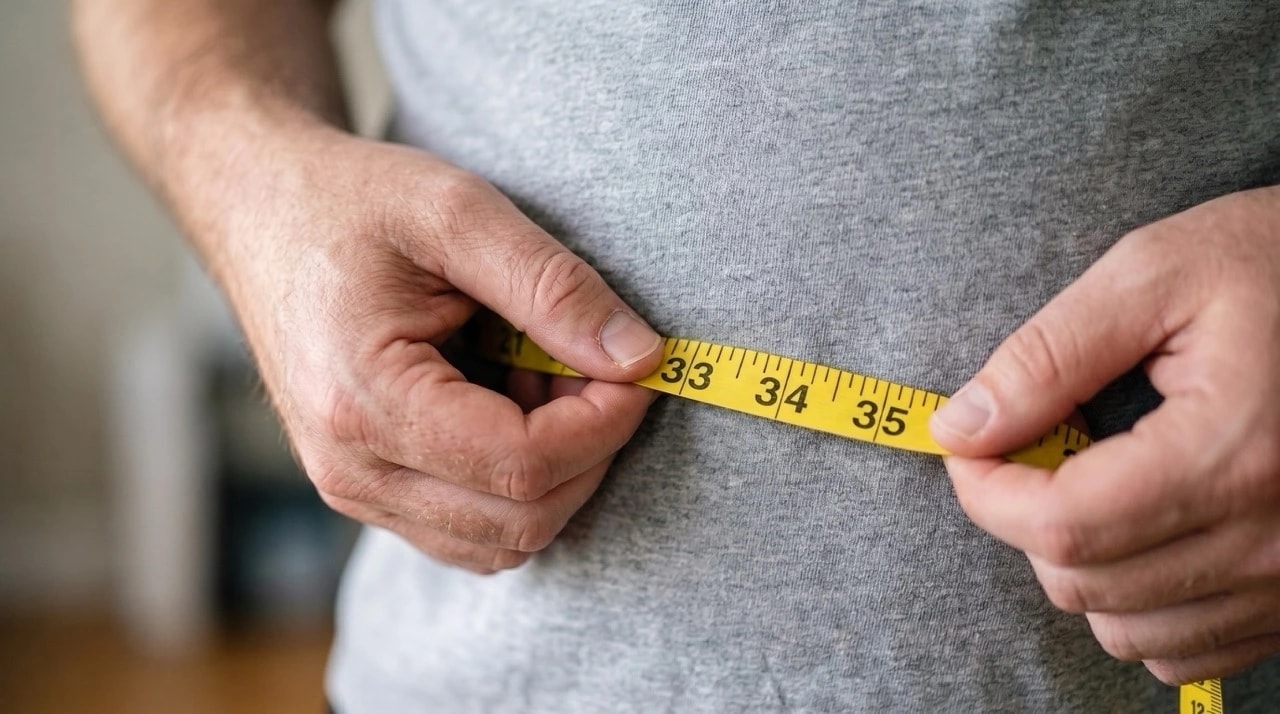
Yes, and the difference matters clinically. Subcutaneous fat sits just under the skin and behaves like storage. Visceral fat sits deeper, wrapped around your organs, and behaves like an active organ of its own. It's the type cortisol drives, and it's the type that releases inflammatory compounds back into circulation.
| Factor | Subcutaneous fat | Visceral fat |
|---|---|---|
| Where it sits | Just under the skin | Deep in the abdomen, around the organs |
| How it feels | Soft, pinchable | Firm midsection that doesn't pinch |
| Cortisol sensitivity | Lower | High, this is the fat stress recruits |
| Metabolic behaviour | Relatively inert storage | Metabolically active, produces inflammatory compounds |
| What shifts it | A sustained calorie deficit | Cortisol and insulin regulation alongside diet |
What is metaflammation?
Metaflammation is the chronic, low-grade inflammatory state that develops when cortisol stays elevated over months or years. It's one of the main reasons weight loss stalls, and it's the piece most standard advice ignores.
Here's the sequence. Sustained cortisol progressively disrupts insulin signalling, so your cells stop responding properly to insulin's message to absorb and use blood glucose. That's insulin resistance. It slows fat oxidation, disrupts hormonal balance, and reduces your ability to use fat for fuel at the same time as it promotes storing more of it. The result is a feedback loop. The more inflamed your metabolism gets, the harder it becomes to regulate energy at all.
That's what we mean by metaflammation, and it's the hidden driver behind midsection weight that doesn't respond to eating less and moving more. Chronic stress does the same thing to the rest of the body, which we cover in our post on whether chronic stress is making you inflamed.
Why pushing harder backfires

Adding aggressive calorie restriction or high-intensity training to an already stressed system raises cortisol further, which intensifies the exact environment causing the problem. It's the trap almost everyone falls into, because restricting more and training harder is the obvious response when the scale won't move.
If your body is already in a chronic stress state, extreme dieting registers as one more threat. Cortisol rises. Muscle tissue gets broken down for fuel. Metabolism slows further, and you end up further from where you started. The same principle applies to escalation-based GLP-1 protocols, which we get into in our post on why higher GLP-1 doses aren't always better long term.
Common signs cortisol is driving your weight include:
- Midsection weight that persists despite clean eating and consistent training
- Feeling wired but tired, exhausted all day and unable to sleep at night
- Afternoon energy crashes
- Sugar cravings that show up in the evening
- Feeling puffy or inflamed even when the scale hasn't changed
- Trying aggressive restriction and feeling worse rather than better
A morning cortisol test or a four-point salivary cortisol panel gives you a direct measurement instead of a guess.
Doing everything right and the midsection still won't shift?
A licensed clinician reviews your history and labs, then builds a plan around what's actually driving it.
Take the assessment
What a stress aware metabolic strategy looks like
An approach that works for stress-driven belly fat has to address cortisol regulation, sleep quality, blood sugar stability, and metabolic support together. Diet and exercise in isolation aren't enough when the hormonal environment is the constraint.

The four levers that matter most:
- Sleep first. It's the highest-leverage change available, and it's the one most people skip because it doesn't feel like effort. Our post on whether poor sleep stops weight loss goes deeper.
- Protein consistency. Adequate protein stabilises blood sugar, blunts cortisol-driven cravings, and protects muscle. Target 0.7 to 1 gram per pound of body weight, spread across your meals rather than loaded into one.
- Resistance training over high-intensity cardio. High-intensity cardio raises cortisol. Moderate-intensity resistance work two to three times a week builds metabolically active muscle without adding to the load.
- Breathwork daily. Five minutes of intentional breathing activates the parasympathetic nervous system and lowers cortisol directly. Our post on 5 minutes of breathing to lower cortisol has the exact protocols.
Where GLP-1 microdosing fits
GLP-1 microdosing uses gradual, fractional doses to reduce inflammatory stress without triggering the acute stress response that comes with standard high-dose escalation. The aim is the lowest effective dose that calms the inflammatory load rather than adding to it.

The downstream effects are the ones that matter here: improved insulin sensitivity, less food noise, steadier energy, and a metabolic environment that can finally respond to the changes you're already making. Our overview of what GLP-1 microdosing is explains how it differs from standard protocols.
Frequently Asked Questions
Where to go from here
Chronic stress isn't just uncomfortable. It's metabolically destructive in specific, measurable ways, and if your midsection isn't responding to your effort, the more useful question isn't what you're eating. It's what your cortisol is doing. Ivologist runs metabolic care as a clinician-guided program, which means labs and history come before a protocol.
Start the 2-minute assessment and a licensed clinician will review your information and recommend a starting plan.
Medical disclaimer. This article is for informational purposes only and does not constitute medical advice. Ivologist provides telehealth services and does not replace primary care. Prescription treatments are available only if clinically appropriate following a medical evaluation. Results vary. Always consult a qualified healthcare provider before starting, changing, or stopping any treatment or supplement program.