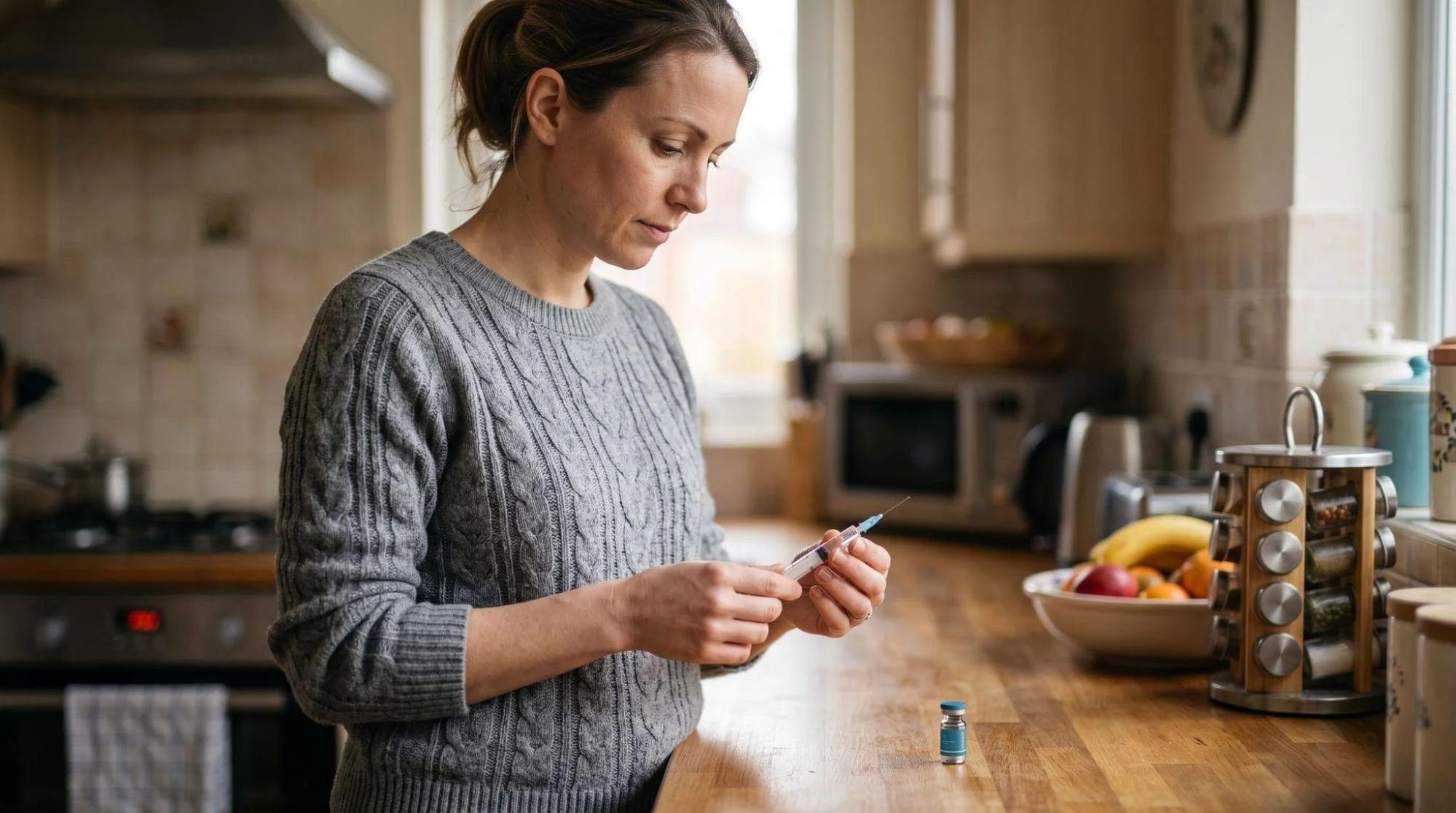
Knowing where to inject semaglutide is most of the technique. It's a subcutaneous injection, which means it goes into the soft fat layer under the skin rather than into muscle, and there are only three places you should be using. Here's how to do it, how to rotate, and how to tell it went in correctly.
Where do you inject semaglutide?
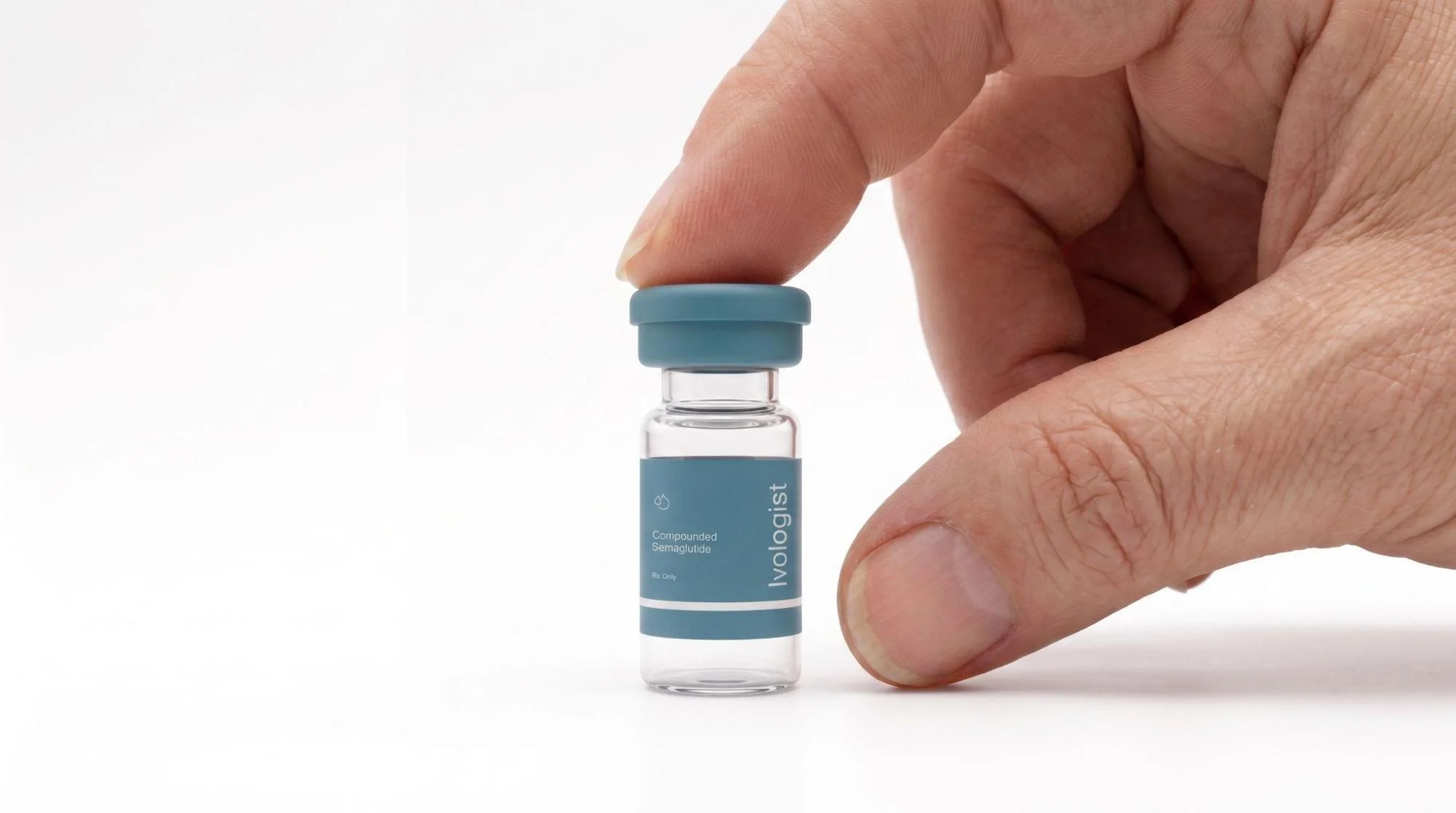
| Site | Where exactly | Worth knowing |
|---|---|---|
| Abdomen | At least two inches away from the belly button | Easiest to see and reach on your own. Tissue near the navel is more sensitive. |
| Thigh | Front or outer thigh, midway between hip and knee | Large surface area, so it's simple to find a fresh spot each time. |
| Upper arm | Upper, outer portion of the arm | Usually has good fat cover, but the angle is awkward solo. A mirror or a second pair of hands helps. |
Skip any area with a visible vein, a bruise, a cut, irritated skin, or a spot you used recently.
How deep does the injection go?
Only as deep as the fat layer under the skin. That's the subcutaneous layer, and it's a different target from an intramuscular injection, which goes into muscle, or an intravenous one, which goes straight into a vein. Semaglutide is designed to absorb slowly out of subcutaneous tissue across the week.
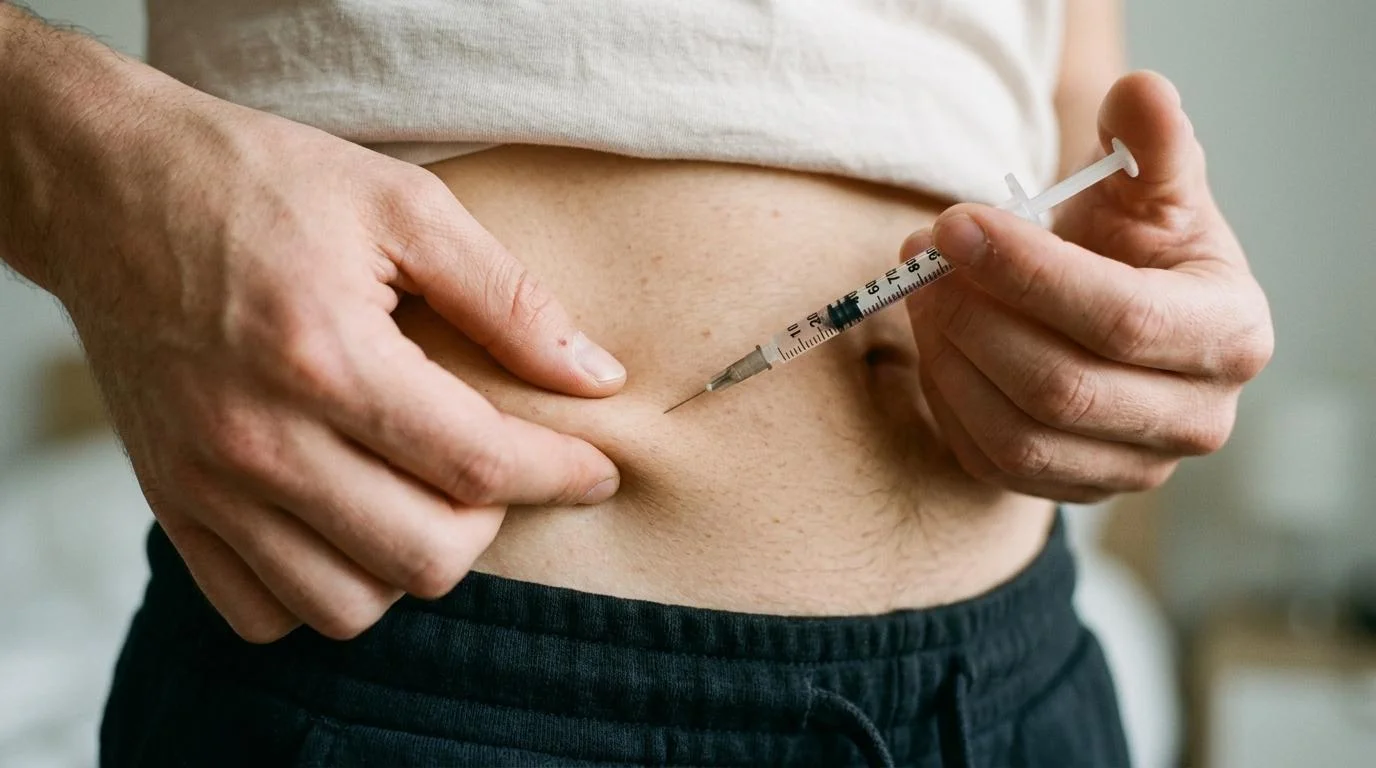
The needles supplied for this are short and fine, so depth mostly takes care of itself. If you're using a prefilled pen, it goes in at a 90-degree angle and the needle length does the work. If you're drawing from a vial with an insulin syringe, pinching the skin and going in at 45 degrees keeps you in the fat layer rather than through it.
How to inject semaglutide, step by step
The whole process takes about two minutes once you've done it a few times. Work in order and don't rush the drying step, because injecting through wet alcohol is a common cause of stinging.
- Take the vial or pen out of the refrigerator roughly 30 minutes ahead so it reaches room temperature. Cold medication stings going in.
- Wash your hands with soap and water.
- Choose your site for this week: abdomen, outer thigh, or upper arm.
- Clean the site with an alcohol swab and let it dry fully. Don't blow on it or wipe it off.
- Draw up your prescribed dose with a new, sterile syringe, or attach a fresh needle to your pen.
- Pinch a small fold of skin to lift the fat layer away from the muscle underneath.
- Insert the needle at a 45-degree angle into the pinched fold, or straight in at 90 degrees if you're using a pen.
- Inject slowly and steadily, then withdraw the needle and release the pinch.
- Apply gentle pressure with a clean cotton ball. Don't rub the site.
- Drop the needle straight into a sharps container, and note which site you used so you rotate next week.
Use a new needle every single time. Reusing one dulls the tip, which hurts more and raises the risk of infection.
First injection coming up and not sure you've got it right?
A licensed clinician walks you through technique, dosing, and what to do if something feels off.
Take the assessment
Rotating sites and knowing it went in properly
Rotation isn't optional. Injecting into the same patch week after week builds scar tissue, causes lumps and skin changes, and makes absorption less predictable over time. If you used your abdomen this week, use a thigh or an arm next week, and keep moving within each area rather than returning to the exact same point.
As for whether it worked, the signals are mostly about what doesn't happen. There shouldn't be much pain, and there shouldn't be bleeding or medication leaking back out. A little discomfort is normal and isn't a reason to worry.
Signs the injection went in correctly include:
- Minimal to no pain at the site, both during and afterwards.
- No medication leaking back out when you withdraw the needle.
- No bleeding, or at most a drop that stops with gentle pressure.
- No lump, hardness, or lasting redness where you injected.
Significant pain can mean the needle went in too deep or into an area without enough fat cover. Continuous bleeding or leakage is worth mentioning to your provider before your next dose. If you want more on choosing between the three areas, our guide on where the best place to inject GLP-1 is goes deeper on site selection.
Timing your dose and storing the medication
Semaglutide is a once weekly injection, and the goal is a steady level in your system. Pick a day and hold it. Morning injections line the appetite effect up with the hours you're actually eating, and some people prefer evening so any nausea passes while they're asleep. Either is fine. Consistency is the part that matters.
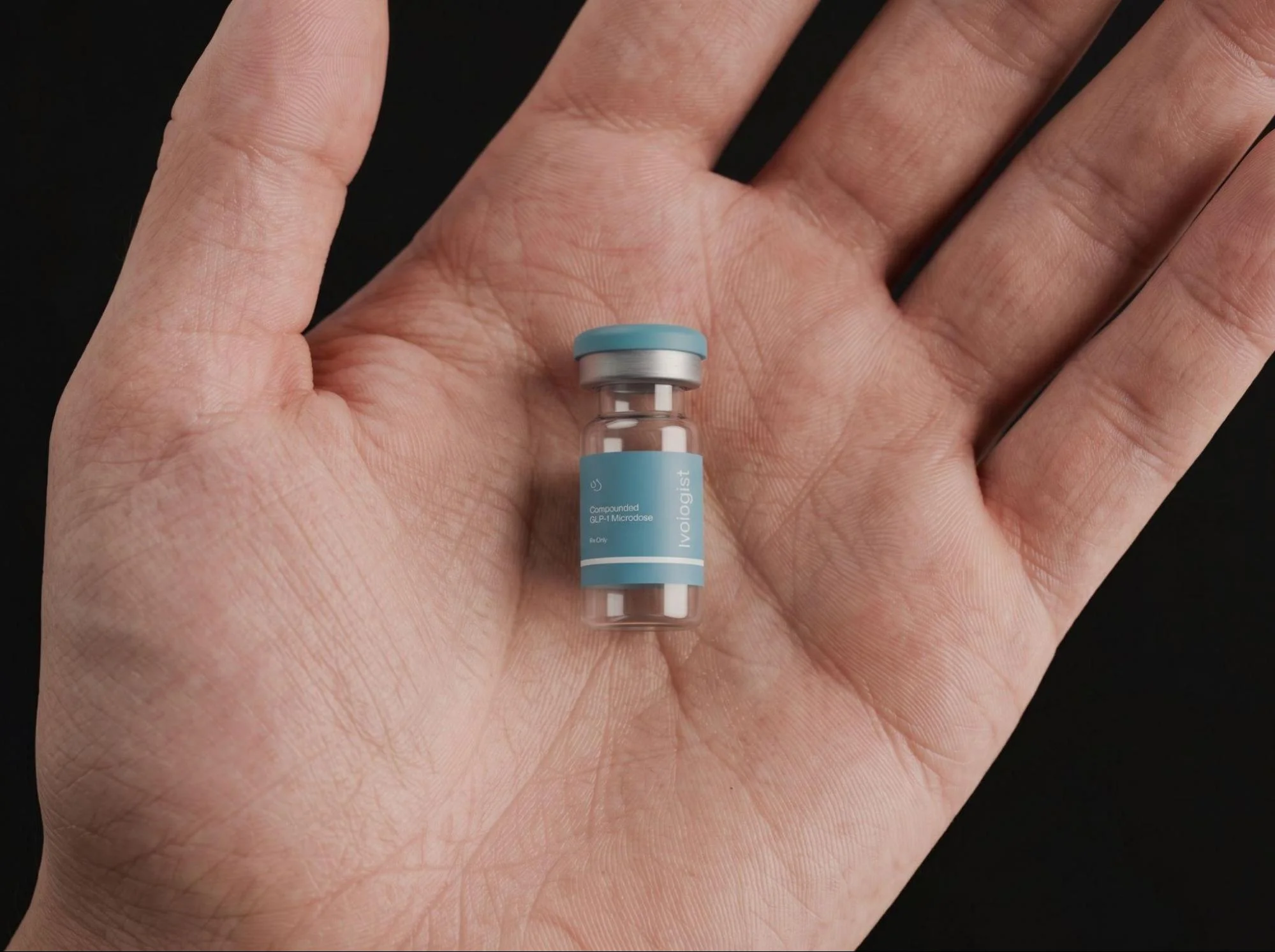
Storing your medication:
- Keep it refrigerated between 2 and 8°C (36 to 46°F).
- Never freeze it. Freezing damages the medication and it can't be used afterwards.
- Keep pens capped between doses to protect the needle and prevent contamination.
- Keep it out of direct sunlight and away from anything above 30°C (86°F). A hot car will ruin it.
Frequently Asked Questions
Where to go from here

Technique is straightforward once someone has shown you, and it's worth getting right early rather than troubleshooting lumps and sore sites three months in. Ivologist runs GLP-1 therapy as a clinician-guided program, so the dose, the schedule, and the injection technique are all reviewed by a licensed provider. If you're still working out your starting dose, our compounded semaglutide dosage chart lays out the standard titration.
Start the 2-minute assessment and a licensed clinician will review your information and recommend a starting plan.
Medical disclaimer. This article is for informational purposes only and does not constitute medical advice. GLP-1 medications are prescription-only and require evaluation by a licensed medical provider. Compounded medications are not FDA-approved. Results vary. Always consult a qualified healthcare provider before starting, changing, or stopping any treatment.