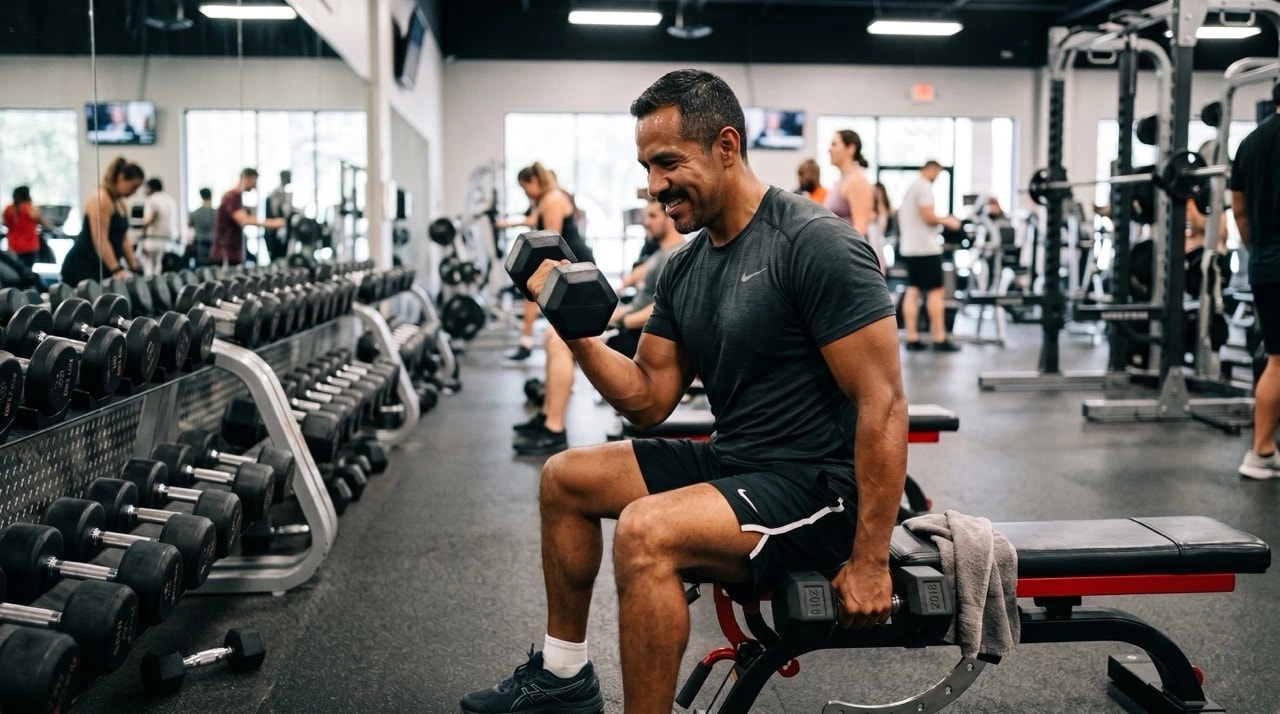
You're eating the way you always have. You're walking the same amount. And somewhere in your forties or fifties, the jar lids got harder, the stairs got longer, and your body started holding weight in places it never used to. If you've started hormone therapy and you're wondering whether lifting weights on HRT is really necessary, the honest answer is that it's the half of the equation most people skip.
Do you need to lift weights on HRT?
Think of it as fuel and engine. Optimized hormones are the fuel, resistance training is the engine, and running one without the other is why so many women feel dramatically better on HRT in terms of energy, sleep, and mood, and still see almost no change in the mirror.
| Factor | What HRT does | What resistance training does |
|---|---|---|
| Muscle protein synthesis | Improves the conditions for it | Provides the stimulus that triggers it |
| Bone | Slows the rate of loss | Signals bone to add material at loaded sites |
| Recovery between sessions | Faster, with less soreness | Creates the demand recovery responds to |
| Body composition | Makes change possible | Makes change happen |
| Balance and fall risk | Little direct effect | Improves it through strength and coordination |
Why your strength changed when nothing else did
What you're feeling is real, and it isn't a discipline problem. Estrogen and testosterone both support muscle protein synthesis, and both fall through perimenopause. The same habits stop producing the same body because the hormonal environment underneath them changed.
Testosterone matters here for women as much as it does for men, and it's routinely left out of the conversation. Estrogen does something different but just as important, supporting joint health, bone, and your ability to recover between efforts. When both are optimized, the same workout produces a better result and you stop needing four days to bounce back. Our post on why does stress cause belly fat covers how the hormonal environment and body composition interact through midlife.

Bone density is the part nobody warns you about
This is the strongest clinical reason to lift, and it's the one that rarely comes up until a scan does. Estrogen restrains the cells that break bone down. When it falls, resorption starts outpacing rebuilding, and bone loss accelerates around the final menstrual period and continues for several years afterward. That pattern was documented in the SWAN study of women through the menopause transition.
Hormone therapy addresses one side of that. Estrogen therapy is FDA approved for the prevention of postmenopausal osteoporosis, and the Women's Health Initiative found that hormone therapy reduced hip and vertebral fractures. That's a genuine protective effect, and it's a good reason to be on it if it's clinically appropriate for you.
But slowing loss isn't the same as building. Bone is living tissue that responds to mechanical load, and it adds material specifically where it gets loaded. Nothing you swallow or absorb through your skin can tell it where. In the LIFTMOR trial, published by Watson and colleagues in the Journal of Bone and Mineral Research in 2018, postmenopausal women with low bone mass who did supervised high intensity resistance and impact training improved bone mineral density rather than simply losing it more slowly. Muscle matters for a second reason too. Most fractures in older women happen because of a fall, and strength and balance are what keep you upright on an icy parking lot.
Not sure whether HRT is right for you?
A licensed clinician reviews your labs, your symptoms, and your history before anything is prescribed.
Start the assessment
What kind of training actually works
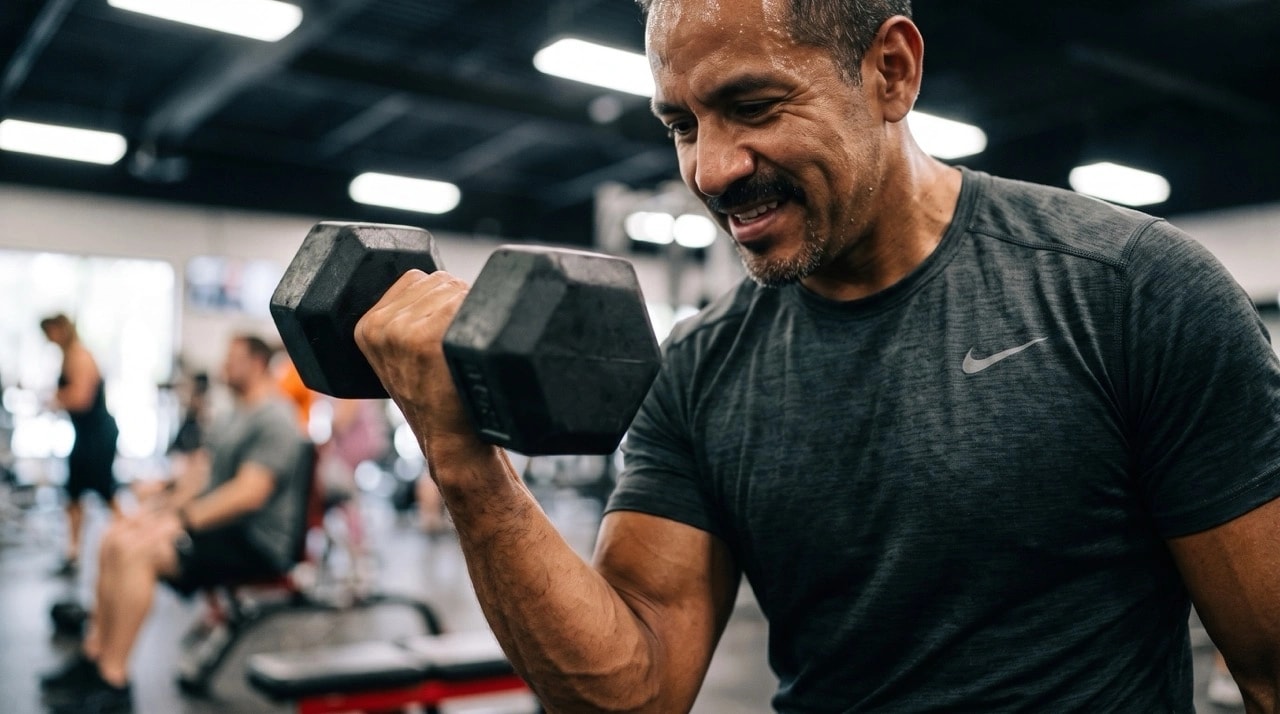
Two to three sessions a week of compound movements is clinically sufficient, and it's more than enough when your hormones are balanced. You don't need an aggressive gym program, a coach, or a six day split.
Compound movements use several muscle groups at once, which is why they load bone across the hip and spine and why they carry over into ordinary life. What makes them work over time is progressive overload, meaning you add a little weight or a rep as the previous week starts to feel manageable. Train on non-consecutive days so recovery has somewhere to happen.
Common compound movements include:
- Squats. Loads the hip and spine, and it's the same pattern as getting off the floor.
- Deadlifts or hip hinges. The strongest loading pattern for the hip and lower back.
- Rows. Counteracts the forward posture that comes with desk work.
- Overhead press. Shoulder strength for anything that goes on a high shelf.
- Lunges or split squats. Single leg work, which is where balance and fall prevention live.
How to start if you've never lifted before
Start smaller than you think you should. The first four weeks are for learning the movements, not for testing what you can lift, and pushing load before your form is stable is how people get hurt and quit.
Your first four weeks:
- Pick two days a week that aren't next to each other and put them in your calendar.
- Choose three movements per session: a squat, a row, and a press.
- Keep the weight light enough to complete 10 to 12 reps with good form, with a couple of reps left in the tank.
- Do two to three sets of each. A session should take 30 to 40 minutes.
- Write down what you lifted. Progressive overload is impossible to run from memory.
- From week five, add a small amount of weight or a rep whenever the previous week felt controlled.
If you're on testosterone as well and want the detail on how it changes training response, see our post on testosterone and fitness, and TRT testing and monitoring for why labs matter more than symptoms alone.

Frequently Asked Questions
Where to go from here

If you're on HRT and the body composition changes haven't arrived, resistance training is almost always the missing variable rather than a problem with your dose. Ivologist runs hormone therapy as a clinician-guided program, with baseline labs, ongoing monitoring, and a plan built around what your results actually show.
Start the assessment and a licensed clinician will review your information and recommend a starting plan. If you're weighing up the wider picture first, our posts on estrogen vs progesterone and testosterone therapy for women are good places to start.
Medical disclaimer. Medical disclaimer. This article is for informational purposes only and does not constitute medical advice. Hormone replacement therapy is prescription-only and requires evaluation by a licensed medical provider. HRT isn't appropriate for everyone, and the balance of risks and benefits depends on your age, your medical history, and how long it's been since menopause. Resistance training carries its own risks if you have existing bone, joint, or cardiovascular conditions. Always consult a qualified healthcare provider before starting, changing, or stopping any treatment or exercise program.