
If you're applying a regrowth topical every day and seeing very little for it, the problem might not be the product. A fortnightly scalp detox clears the compacted layer of sebum and residue sitting over your follicle openings, and that layer is often the reason active ingredients underperform. Here's what buildup actually does, why two weeks is the right interval, and where scalp care stops being the answer.
What does a scalp detox actually do?
A scalp detox is a deeper clean than a normal wash. It removes the compacted mix of sebum, styling product, dry shampoo residue, dead skin cells, and environmental pollutants that regular shampoo clears from the hair but not from the skin underneath it.
The word "detox" oversells it a little. Nothing is being drawn out of your bloodstream. What's happening is mechanical and local: you're clearing a physical barrier off the follicle openings so the skin can circulate and absorb what you put on it.
| Factor | Regular shampoo wash | Fortnightly scalp detox |
|---|---|---|
| What it clears | Surface oil and loose debris | Compacted residue at the follicle opening |
| Frequency | Every one to three days | Every two weeks |
| Method | Single cleanse | Massage, exfoliate, double cleanse |
| Effect on topicals | Little change in absorption | Clearer path to the follicle |
| Risk if overdone | Dryness with harsh formulas | Stripped sebum, tight or brittle scalp |
What scalp buildup is and why it matters
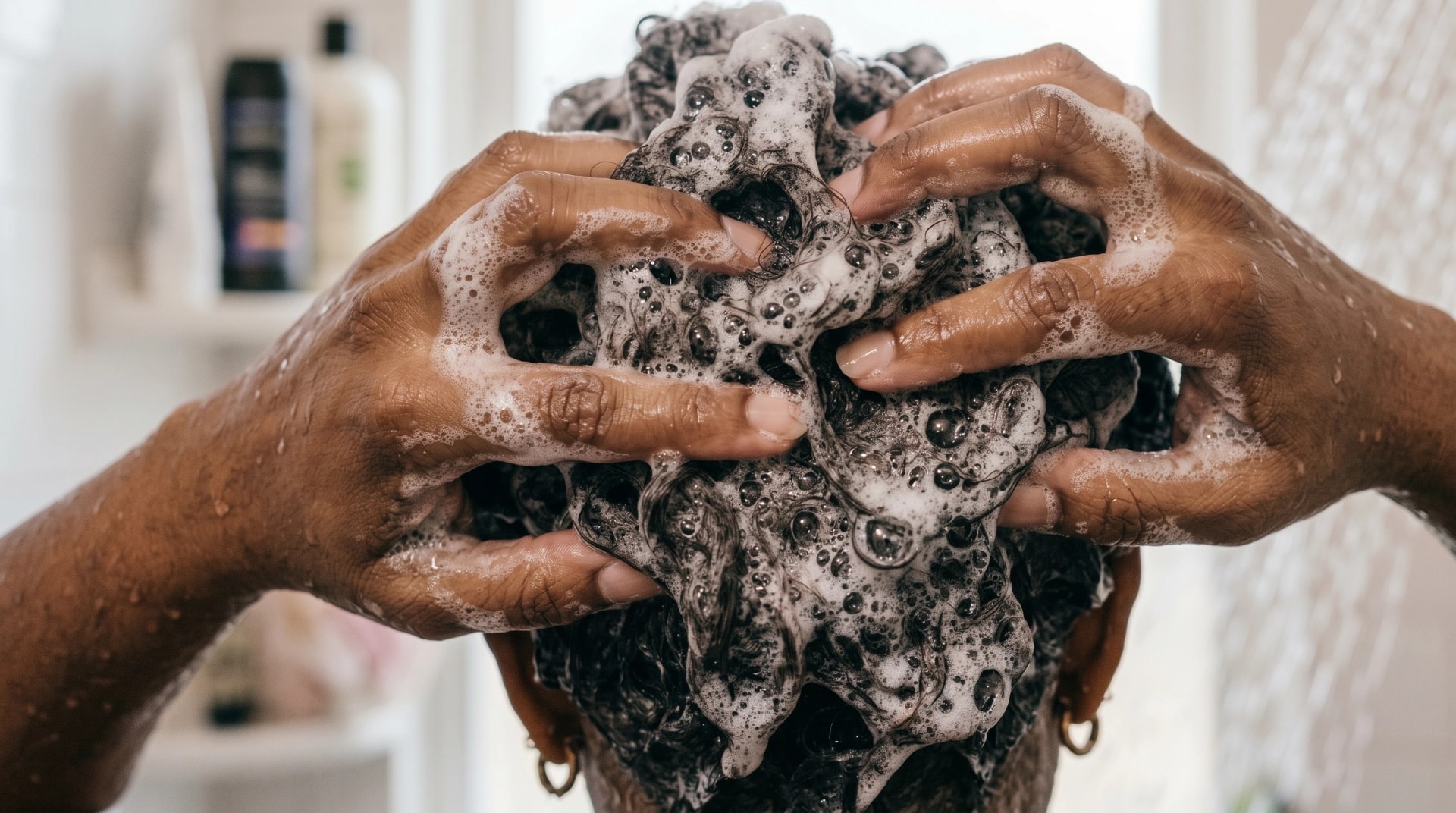
Buildup is an accumulation, not a single substance. Sebum from your own oil glands binds with silicones and polymers from styling products, dry shampoo starches, shed skin cells, and airborne pollutants into a layer that ordinary shampoo can't fully break through.
Four things follow from that. The follicle opening gets occluded. Circulation at the surface is restricted. A low grade inflammatory environment develops. And your oil glands often overproduce to compensate for blocked openings, which makes the scalp feel greasier the longer it's left. That last one is why people wash more frequently and still feel oily by the afternoon.
Why every two weeks is the right interval
Two weeks is long enough for buildup to matter and short enough that it hasn't fully compacted. Weekly detoxing strips too much of the sebum your scalp needs as a moisture barrier, and monthly gives the cycle time to re-establish itself between sessions.
It isn't a rule. Skin type, product use, climate, and how often you train all shift the number, so treat fortnightly as the starting point and adjust from there.
Doing everything right and still seeing thinning?
A licensed clinician reviews what's driving it before recommending anything.
Call (210) 436-8822How to tell if your frequency is wrong
Your scalp gives you clear feedback within a couple of cycles, and the two failure modes look nothing alike.
Signs you're detoxing too often include:
- Tightness or dryness across the scalp after washing
- Increased sensitivity or a reactive, easily irritated feeling
- Hair that feels brittle or straw-like once it dries
Signs you need it more often include:
- Visible flaking within a day or two of washing
- Oiliness that returns much faster than it used to
- Persistent scalp odor between washes
Adjust by a few days at a time rather than jumping straight to weekly. Overcorrecting is the common mistake here.
The four step fortnightly scalp detox
The full protocol takes about fifteen minutes and runs in a fixed order: loosen, dissolve, remove, then condition. Doing them out of sequence undoes the work.
The four steps:
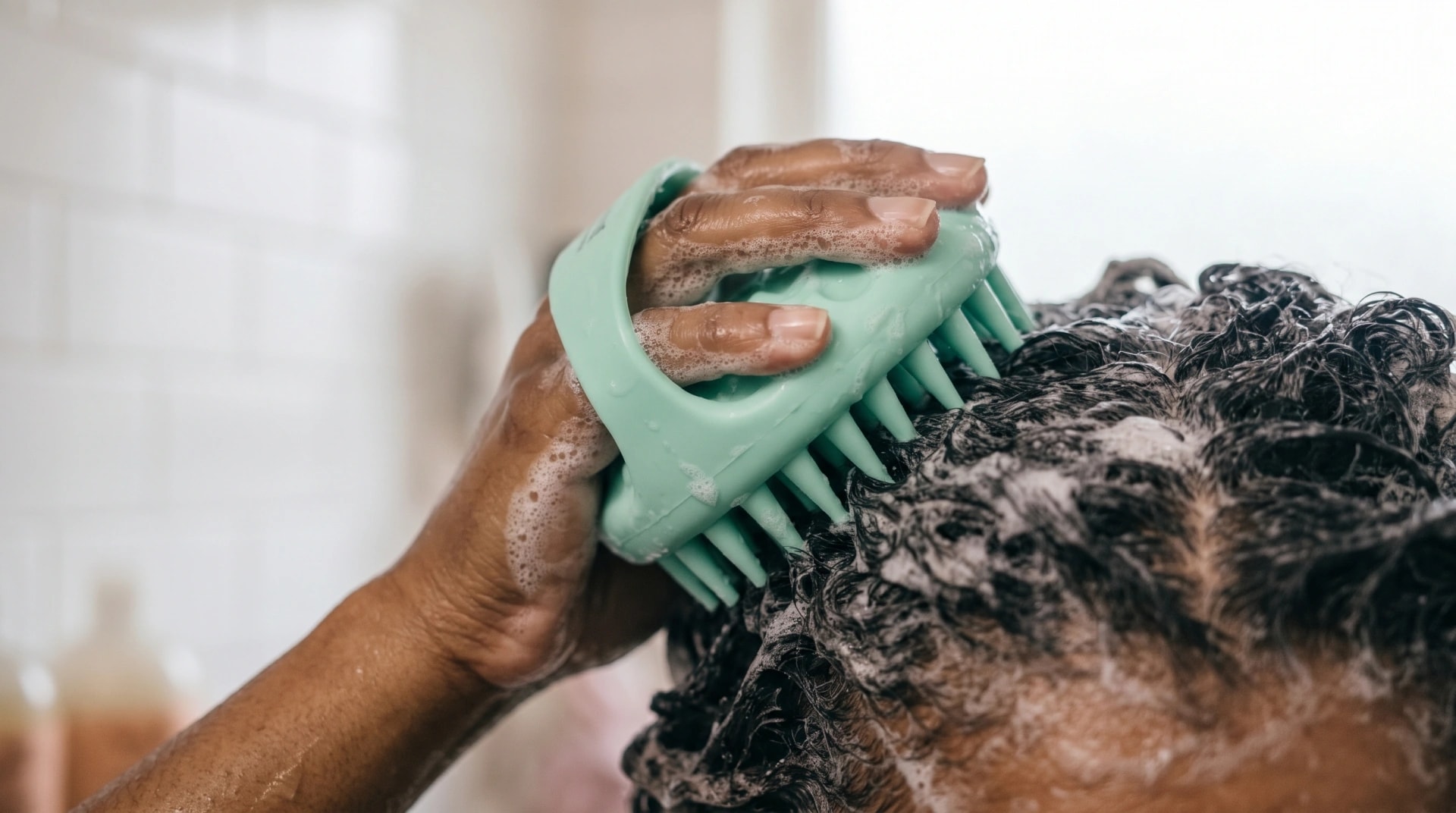
- Dry massage, before you shower. Fingertips or a soft scalp brush, firm circular motions, two to three minutes. This loosens dead skin and stimulates blood flow before any product goes near it.
- Exfoliate on the dry scalp. Apply a scalp exfoliant and leave it three to five minutes. A DIY version works well: two tablespoons of raw apple cider vinegar diluted in a cup of warm water. The mild acidity dissolves product residue and sebum while helping restore the scalp's pH.
- Double cleanse. Wash once with a gentle sulfate free shampoo to clear the loosened surface debris, then follow with a clarifying shampoo to deep clean the follicle openings.
- Conditioner on the lengths only. Mid shaft to ends. Putting conditioner on the scalp straight after a detox re-blocks exactly what you just cleared.
If you're using a topical regrowth treatment, apply it to a clean dry scalp after the detox rather than before. That's the point in the fortnight when absorption is least obstructed.
Where scalp care stops and hormones start
Scalp inflammation is local, but a lot of what drives hair thinning isn't. Elevated DHT, hormonal shifts, chronic stress, and insulin resistance all affect follicle health from the inside, and no amount of washing touches any of them.
That's the honest limit of this routine. A clear scalp is the condition that lets a real treatment work. It isn't the treatment. If thinning is progressing, if you're shedding noticeably more than usual, or if the pattern is changing, that's a clinical question rather than a shower routine question.

Systemic factors that affect the follicle include:
- DHT sensitivity. The most common driver of pattern thinning in both men and women.
- Hormonal shifts. Postpartum, perimenopause, thyroid changes, and coming off hormonal contraception all show up in the hair.
- Chronic stress. Sustained cortisol shifts follicles out of their growth phase. Our post on chronic stress and inflammation covers the mechanism.
- Insulin resistance and rapid weight change. Both affect the nutrient supply reaching the follicle.
For the full picture, read our post on hair loss, hormones, and metabolic health. This article stays deliberately on the routine.
Frequently Asked Questions
Where to go from here

A fortnightly scalp detox is a small, repeatable habit that keeps the foundation clear and receptive. It's worth doing on its own merits, and it's most valuable when it sits alongside treatment aimed at whatever is actually causing the thinning.
Start the hair assessment and a licensed clinician will review your history, your pattern of thinning, and the hormonal and metabolic factors behind it before recommending a plan.
Medical disclaimer. This article is for informational purposes only and does not constitute medical advice. Hair loss has many causes, and treatment should follow evaluation by a licensed medical provider. Prescription hair regrowth treatments require a medical evaluation and are available only if clinically appropriate. Results vary. Stop any topical product and consult a clinician if you develop scalp irritation, a rash, or sudden or patchy shedding.