
If you're trying to boost GLP-1 naturally, the levers you actually control are what you eat, the order you eat it in, and the time of day you eat it. None of that requires a prescription, and it works whether or not you're on medication. What it doesn't do is match what a GLP-1 receptor agonist does, and it's worth being clear about that difference up front.
How do I boost GLP-1 naturally?
You boost GLP-1 naturally by putting fiber and protein in front of your carbohydrates at each meal, and by keeping the bulk of your eating inside daylight hours. Those two habits, meal sequencing and chrono-nutrition, change how much GLP-1 your intestine releases from the same food.
It's worth setting expectations honestly. Natural GLP-1 is released in response to a meal and then clears. Semaglutide and tirzepatide mimic the same hormone at much higher, sustained levels, which is why they produce the effects they do. Eating well raises your own output meaningfully, but it doesn't reproduce a medication.
| Factor | Your own GLP-1 | GLP-1 receptor agonist |
|---|---|---|
| What triggers it | Food reaching the small intestine, mainly fiber and protein | A weekly injection |
| Level reached | Meal-sized, then it clears | Much higher and sustained |
| What you control | Food choice, meal order, timing | Dose, set by a clinician |
| Prescription needed | No | Yes |
| Best used as | The foundation, on its own or underneath therapy | Clinical treatment when it's indicated |
What is GLP-1 and why does it matter?
GLP-1 (glucagon-like peptide-1) is an incretin hormone produced by L-cells in the small intestine in response to food. It slows gastric emptying, enhances insulin secretion, suppresses glucagon, and reduces appetite signaling in the brain. That combination is why it sits at the center of modern metabolic care.
The strongest natural triggers for GLP-1 release are fiber and protein. When those reach your L-cells first, output increases compared with meals where carbohydrates arrive first. If you want the medication side of the picture, our comparison of semaglutide vs. tirzepatide covers how the two drugs differ.

What is chrono-nutrition?
Chrono-nutrition is aligning your eating patterns with your circadian rhythm. Your metabolic machinery, including insulin sensitivity, GLP-1 production, and glucose tolerance, runs on a daily cycle that peaks during daylight and drops off in the evening.
In practice that means taking most of your calories inside a 10 to 12 hour window during the day, typically somewhere between 7 AM and 7 PM. This isn't restriction. It's timing. The same meal eaten at noon produces a different hormonal response than the same meal eaten at 10 PM.

Eating well and still not seeing the metabolic change you expected?
A licensed clinician reviews your history and tells you whether food alone is enough in your case.
Take the assessment
How meal sequencing boosts natural GLP-1
Meal sequencing is eating the parts of a meal in a set order to change the hormonal response: vegetables and fiber first, then protein, then carbohydrates and fats. Nothing is removed from the plate. Only the order changes.
When fiber reaches the L-cells in your small intestine before simple carbohydrates, GLP-1 release is amplified, and protein adds to that effect. What you feel downstream is steadier blood sugar, smaller post-meal glucose spikes, and fullness that lasts. We recommend sequencing to every patient, on therapy or not. For patients on a microdosing protocol it amplifies what the medication is already doing to blood sugar and appetite. For patients on no medication at all, it's worth doing on its own.
Common sequencing mistakes include:
- Starting with the bread, the rice, or the fries because they're the easiest thing to reach for.
- Treating a salad as a side dish at the end of the meal instead of the opening course.
- Drinking a sweetened drink before any food has arrived.
- Sequencing lunch carefully and then eating a carbohydrate-heavy dinner at 10 PM, which undoes the timing benefit.
More food-level tactics are in our post on tips to maximize your semaglutide results.
The cortisol and eating timing connection
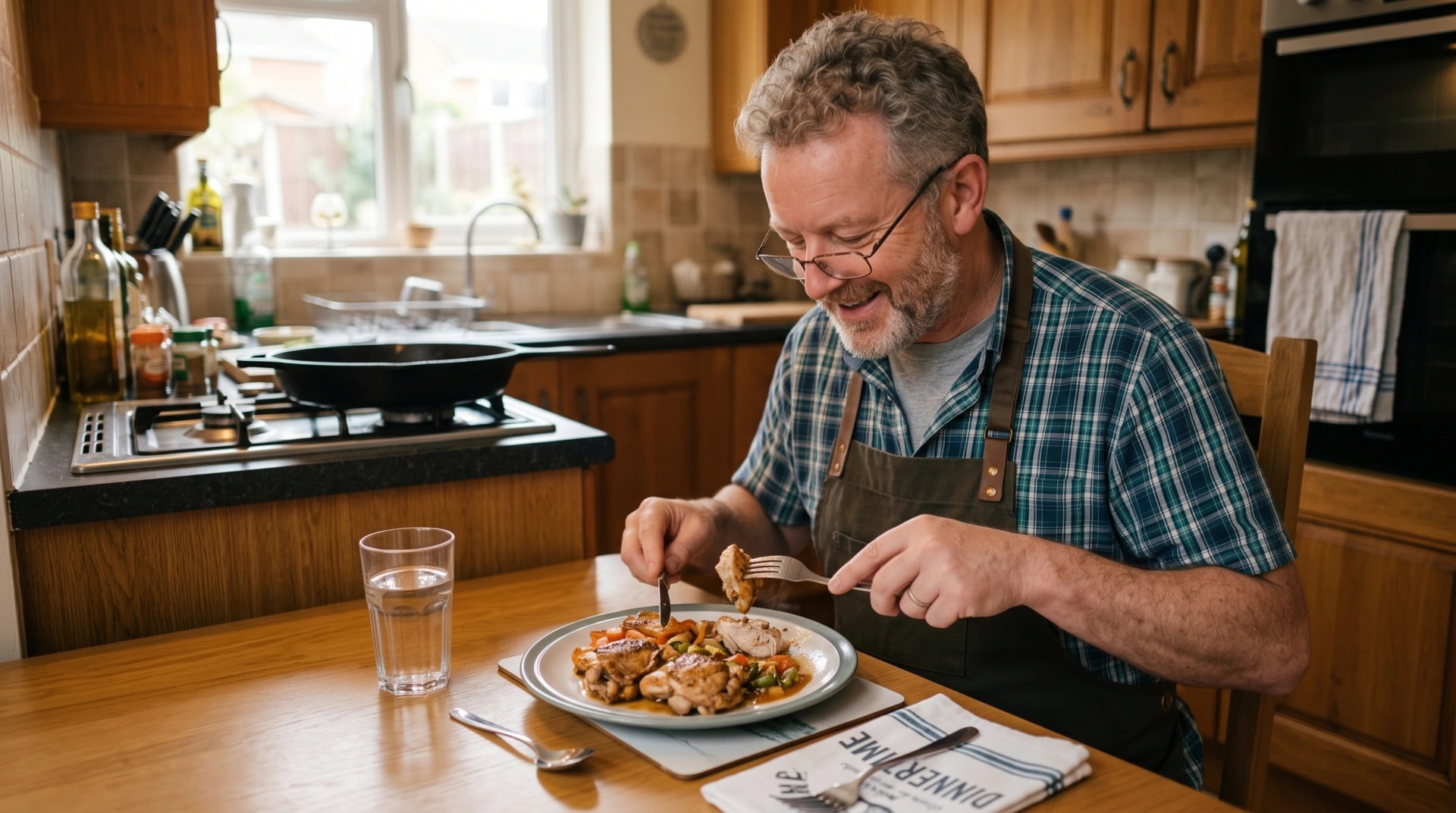
Late-night eating doesn't just add calories, it changes how those calories get processed. Eating after dark, especially carbohydrate-heavy meals, interferes with melatonin production and pushes cortisol up at the hour when both should be winding down.
That combination impairs insulin sensitivity, reduces GLP-1 output, and shifts your body toward storing fat rather than burning it. It's one of the most underappreciated factors in metabolic health. Plenty of patients eat carefully all day and then snack after dinner, and they're quietly working against themselves during the hours the body should be recovering.
A day that respects the clock:
- Eat your first meal within an hour or two of waking.
- Open every meal with vegetables or another fiber source.
- Follow with protein, then the carbohydrates and fats.
- Keep the whole eating window to 10 to 12 hours.
- Finish eating 2 to 3 hours before bed, and leave the evening carbohydrate snack out.
Frequently Asked Questions
Where to go from here

Chrono-nutrition and meal sequencing are among the most accessible metabolic interventions there are, and they're worth doing regardless of what else you're considering. Whether food alone is enough for you is a clinical question, and it depends on where your metabolism is starting from.
Start the 2-minute assessment and a licensed clinician will review your information and recommend a starting plan.
Medical disclaimer. This article is for informational purposes only and does not constitute medical advice. GLP-1 medications are prescription-only and require evaluation by a licensed medical provider. Compounded medications are not FDA-approved. Results vary. Always consult a qualified healthcare provider before starting, changing, or stopping any treatment.