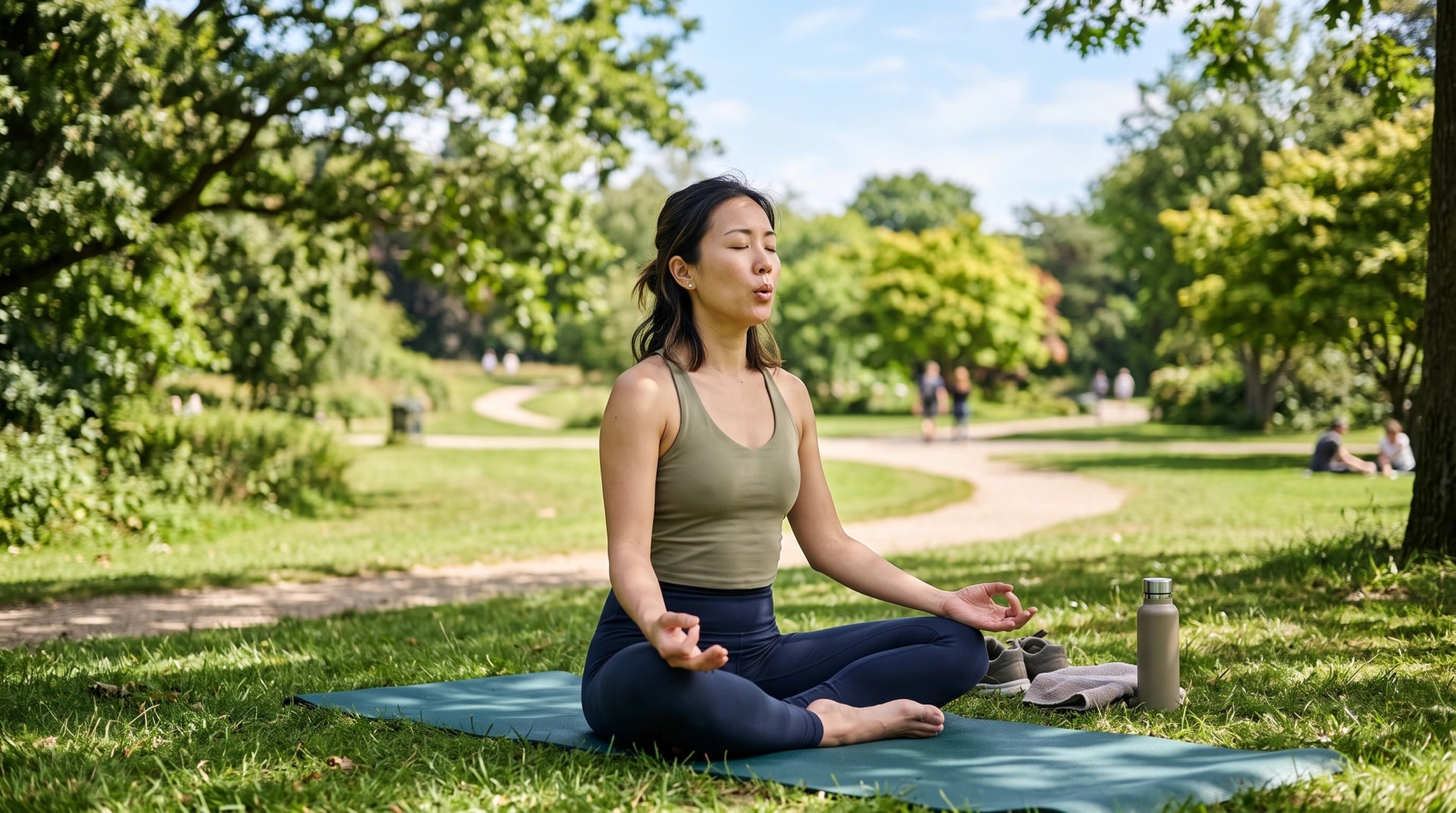
Most things that lower cortisol take weeks. Diet changes, training, sleep repair, they all work, and they all work slowly. Breathing is the exception. Five minutes of deliberate breathing shifts your autonomic nervous system while you're doing it, and you don't need an app, a retreat, or half an hour you don't have.
Why cortisol control matters for metabolic health
Cortisol isn't the villain. It's a survival hormone that mobilises energy when you need it. The problem is chronicity, not the hormone itself.
When cortisol stays elevated for weeks and months, a few things follow. Visceral fat accumulates as cortisol directs glucose storage toward abdominal tissue. Cells become less responsive to insulin signalling. Muscle gets broken down for fuel because the body prioritises immediate energy over structure. Sleep architecture gets disrupted, which raises cortisol again the next day. That last one is what makes it a cycle rather than a phase. We covered the fat storage side of this in detail in our post on why stress causes belly fat.
Breaking that cycle means intervening at the level of the nervous system, not just at the level of diet and exercise.
Why breathing works when other relaxation advice doesn't
Your breathing pattern is the only autonomic function you can take manual control of. You can't consciously slow your heart rate or drop your blood pressure. You can change your breath, and the breath is wired into the same system.
When you deliberately slow your breathing and lengthen the exhale, you stimulate the vagus nerve, the main conduit between the brain and the parasympathetic nervous system. That shifts autonomic balance away from sympathetic dominance, the fight or flight state, and toward parasympathetic activity, the rest and digest state. Heart rate slows, blood pressure drops, and the physiological conditions that drive cortisol output ease off.
So this isn't relaxation in the soft sense of the word. It's a mechanical intervention on a system that's otherwise running without your input.

Technique 1: box breathing
Box breathing uses four equal phases, which is where the name comes from. The even rhythm builds parasympathetic tone steadily rather than sharply, which is why it suits sustained, lower intensity stress rather than a spike.
The protocol:
- Inhale through the nose for 4 seconds.
- Hold for 4 seconds.
- Exhale through the mouth for 4 seconds.
- Hold for 4 seconds.
- Repeat the cycle for 5 minutes.
This is the technique Navy SEALs use for stress regulation in high pressure environments, and it works well as a transition between demanding activities. If four seconds feels like a strain at first, run it at three and build up. Forcing the count defeats the purpose.
| Factor | Box breathing | Physiological sigh |
|---|---|---|
| Best for | Steady, ongoing stress | Acute stress and spikes |
| Speed of effect | Builds over several minutes | Noticeable within seconds |
| Session length | 5 minutes | 1 to 5 minutes |
| Learning curve | Needs a count to follow | Your body already does it |
| Best timing | Morning, or between tasks | Before meals and before bed |
Technique 2: the physiological sigh
The physiological sigh is a pattern your body already runs involuntarily during sleep and while crying. Doing it on purpose produces a faster shift in autonomic state than most other breathing techniques.
The protocol:
- Inhale fully through the nose.
- Add a second, shorter inhale on top of it, without exhaling in between.
- Let the air out through the mouth in one long, slow exhale.
- Repeat for 5 minutes, or 1 to 2 minutes if stress is acute.
The double inhale inflates the alveoli in your lungs more completely, which increases the surface area available for offloading carbon dioxide. The extended exhale is what recruits parasympathetic tone. Together they move you out of a stress state quickly, which is why it's the one to reach for when you don't have five minutes.
Doing everything right and still not seeing results?
A licensed clinician reviews your history, including stress physiology, and builds a plan around it.
Take the assessment
When to practise, and how often
Effectiveness comes from frequency, not session length. Five minutes daily does considerably more than a long session once a week, because you're training a baseline rather than treating an episode.

Three windows that work:
- Morning. Box breathing in the first hour after waking. Cortisol naturally peaks in the morning, and a short practice helps regulate the amplitude of that spike rather than removing it.
- Midday. A physiological sigh session between 1 and 3 PM addresses the afternoon cortisol bump that tends to drive energy crashes and sugar cravings.
- Evening. Either technique before bed supports the natural cortisol decline that restorative sleep depends on. If sleep is already the weak link, our post on whether poor sleep stops weight loss is worth reading alongside this.
The thing that makes it stick is habit stacking. Attach the practice to something you already do without thinking. Before your first coffee. After you park at work. Before you sit down to dinner. Deciding to breathe at some point today almost never survives the day.
Frequently Asked Questions
Where to go from here

Cortisol is one of the most overlooked variables in metabolic health. If your diet and training are in order and progress has stalled anyway, your stress physiology is the next place to look, and Ivologist treats it as part of the clinical picture rather than a side note. Our overview of what GLP-1 microdosing is covers how that fits into a broader metabolic plan.
Start the 2-minute assessment and a licensed clinician will review your information and recommend a starting plan.
Medical disclaimer. This article is for informational purposes only and does not constitute medical advice. Breathing techniques aren't a substitute for evaluation or treatment of anxiety, cardiovascular conditions, or respiratory conditions. Results vary. Always consult a qualified healthcare provider before starting, changing, or stopping any treatment.