
Most semaglutide protocols are built to get you to a therapeutic dose quickly. Microdosing semaglutide does the opposite. You start smaller, you move slower, and you stop climbing the moment the dose is doing its job. Here's how the protocol actually runs, step by step.
What does microdosing semaglutide mean?
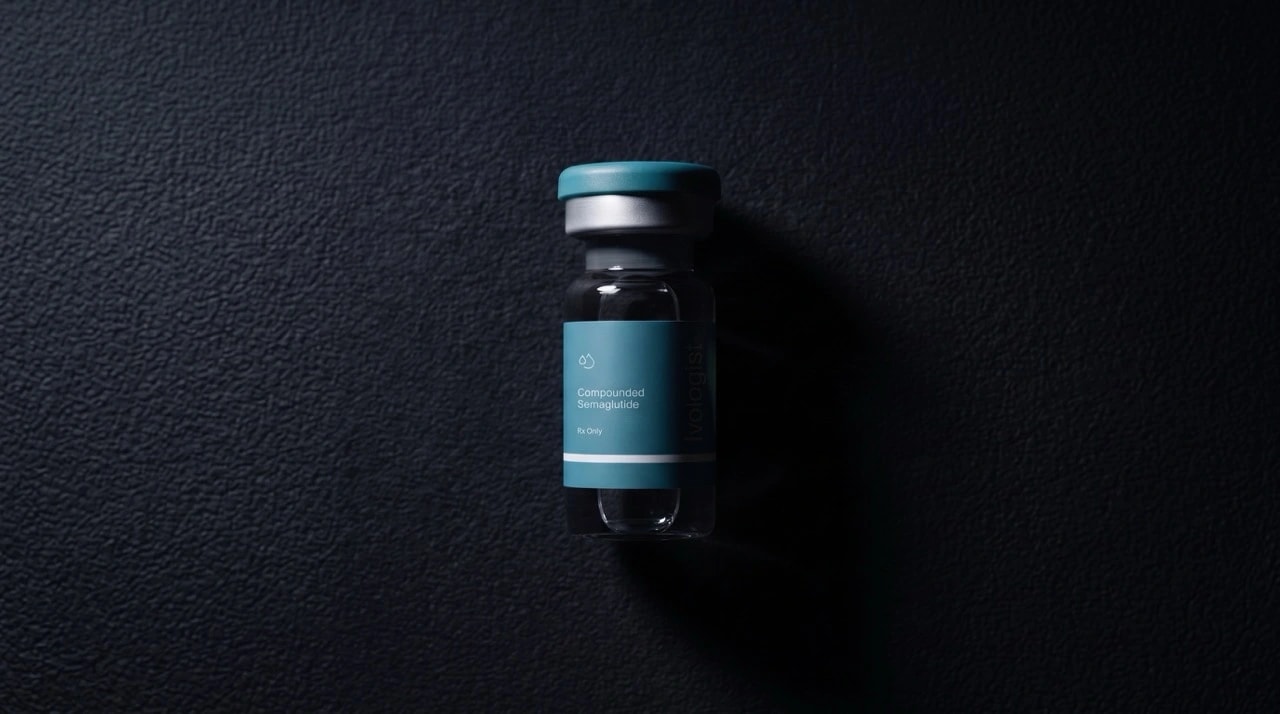
The reason people choose it is usually tolerance or cost. Smaller doses are easier for the body to handle, and a vial stretches further. If you want the fuller background on the approach itself, our guide to GLP-1 microdosing for weight management covers the what and why. This article is about the how.
| Factor | Standard titration | Microdose protocol |
|---|---|---|
| Starting dose | 0.25 mg weekly | 0.05 mg weekly |
| Increment | Doubling steps toward 1.0 mg and above | About 0.1 mg per step |
| Step interval | Every 4 weeks | Every 2 to 4 weeks, tolerance dependent |
| Ceiling | Up to 2.4 mg weekly | The lowest dose that still works for you |
| Primary aim | Maximum appetite suppression | Steady metabolic signalling with minimal disruption |
How semaglutide works when the dose is small
Semaglutide is a GLP-1 receptor agonist, which means it mimics glucagon-like peptide-1, a hormone your body already makes. It prompts insulin release when blood sugar is high, suppresses glucagon, slows how fast your stomach empties, and quiets hunger signalling in the brain.
Those four mechanisms don't switch on all at once. Glycemic and gastric effects show up at doses well below the appetite suppression most people associate with the drug. That's the logic behind microdosing. You're aiming for the metabolic signalling without the blunt force of a full therapeutic dose.

The four phase microdosing protocol
The protocol runs in four phases, and each one has a different job. Reset lets your system meet the medication. Rebalance finds the range where it starts working. Optimize fine tunes it. Maintain holds you there.
| Phase | Timing | Weekly dose | What this phase is doing |
|---|---|---|---|
| Reset | Weeks 1 to 4 | 0.05 mg | Letting your body adapt with almost no side effect load |
| Rebalance | Weeks 5 to 8 | 0.1 to 0.15 mg | First noticeable changes in appetite and blood sugar steadiness |
| Optimize | Weeks 9 to 12 and on | Add about 0.1 mg every 4 weeks | Finding the smallest dose that produces the result you want |
| Maintain | Once the dose works | Hold steady | Staying there instead of continuing to climb |
Running the protocol, step by step:
- Get a prescription and a plan. Semaglutide isn't available over the counter, and a microdose schedule is a clinical decision, not a self-directed experiment.
- Start at 0.05 mg once weekly and stay there for four full weeks. Pick one day and keep it.
- Track your response through the reset phase. Note appetite, energy, digestion, and anything that feels off.
- At week five, increase by about 0.1 mg if the first dose was well tolerated. If it wasn't, extend the reset phase instead of climbing.
- Repeat that increment every two to four weeks, using tolerance rather than the calendar to decide when.
- From week nine onward, slow to roughly 0.1 mg every four weeks. Progress that's still happening doesn't need a bigger dose.
- Stop increasing once you're getting the result you want, and hold that dose. That's your maintenance point, and it's usually well below full therapeutic levels.
- Review with your provider at every phase change, not just when something goes wrong.
Rotate injection sites each week between the abdomen, outer thigh, and upper arm. Our guide on the best place to inject GLP-1 medications goes through placement in detail.
Want a microdose schedule built around your labs, not a template?
A licensed clinician reviews your history and sets the starting dose and the step intervals.
Take the assessment
Side effects and safety on a microdose

Side effects are usually milder on a microdose protocol than on standard titration, but they aren't absent. They're most likely in the days right after a step up, which is exactly why the increments are small and the intervals are flexible.
Common side effects include:
- Nausea, typically mild and concentrated in the first week after an increase
- Bloating, constipation, or diarrhoea
- Reduced appetite and feeling full sooner than usual
- Fatigue or dips in energy during the early phases
- Mild soreness at the injection site
If a step up produces symptoms you can't work around, the answer is to drop back to the previous dose and hold, not to push through. Contact your provider if vomiting stops you keeping fluids down or if you develop severe abdominal pain that doesn't settle.
What makes the protocol actually work
The dose is the smaller half of the equation. On a microdose you don't get the heavy appetite suppression that papers over poor habits, so what you eat and how you train carries more weight than it would at 2.4 mg.

What protects your results:
- Protein and whole foods first. Lean proteins, leafy greens, and whole grains steady blood sugar and reinforce what the medication is doing.
- Low impact movement you'll repeat. Walking, swimming, yoga, or light strength work. Consistency beats intensity here. Our guide on preventing muscle loss on GLP-1 medications covers the training side.
- Stress and sleep management. Mindfulness, breathing work, and adequate sleep lower cortisol, which affects metabolic function independently of the drug.
- Patience through the first two months. Patients on microdose protocols commonly report their clearest changes somewhere between weeks 8 and 12.
Tracking progress and knowing when to adjust
Because the doses are small and the changes are gradual, tracking isn't optional on this protocol. It's the only reliable way to tell whether a dose is working or whether you've simply plateaued.
Keep a weekly log of your dose, appetite, energy, mood, and any side effects. Patterns in that log are what tell your provider whether to hold, step up, or step back. Bring it to every check in.

Frequently Asked Questions
Where to go from here
Microdosing works when someone is watching the response and adjusting the schedule to it. The protocol above is a framework, and the useful part is knowing when to hold and when to move. Ivologist runs GLP-1 therapy as a clinician-guided program with transparent pricing and FDA-registered compounding pharmacies.
Start the 2-minute assessment and a licensed clinician will review your information and recommend a starting plan.
Medical disclaimer. This article is for informational purposes only and does not constitute medical advice. GLP-1 medications are prescription-only and require evaluation by a licensed medical provider. Compounded medications are not FDA-approved. Results vary. Always consult a qualified healthcare provider before starting, changing, or stopping any treatment.


