
If you've spent any time around skincare or peptide content this year, you've seen the GHK-Cu peptide described as everything from a wrinkle fix to a hair regrowth shot. The name's everywhere, but the evidence is narrower than the marketing, and it's worth knowing where the line sits before you spend money on it.
What is the GHK-Cu peptide?
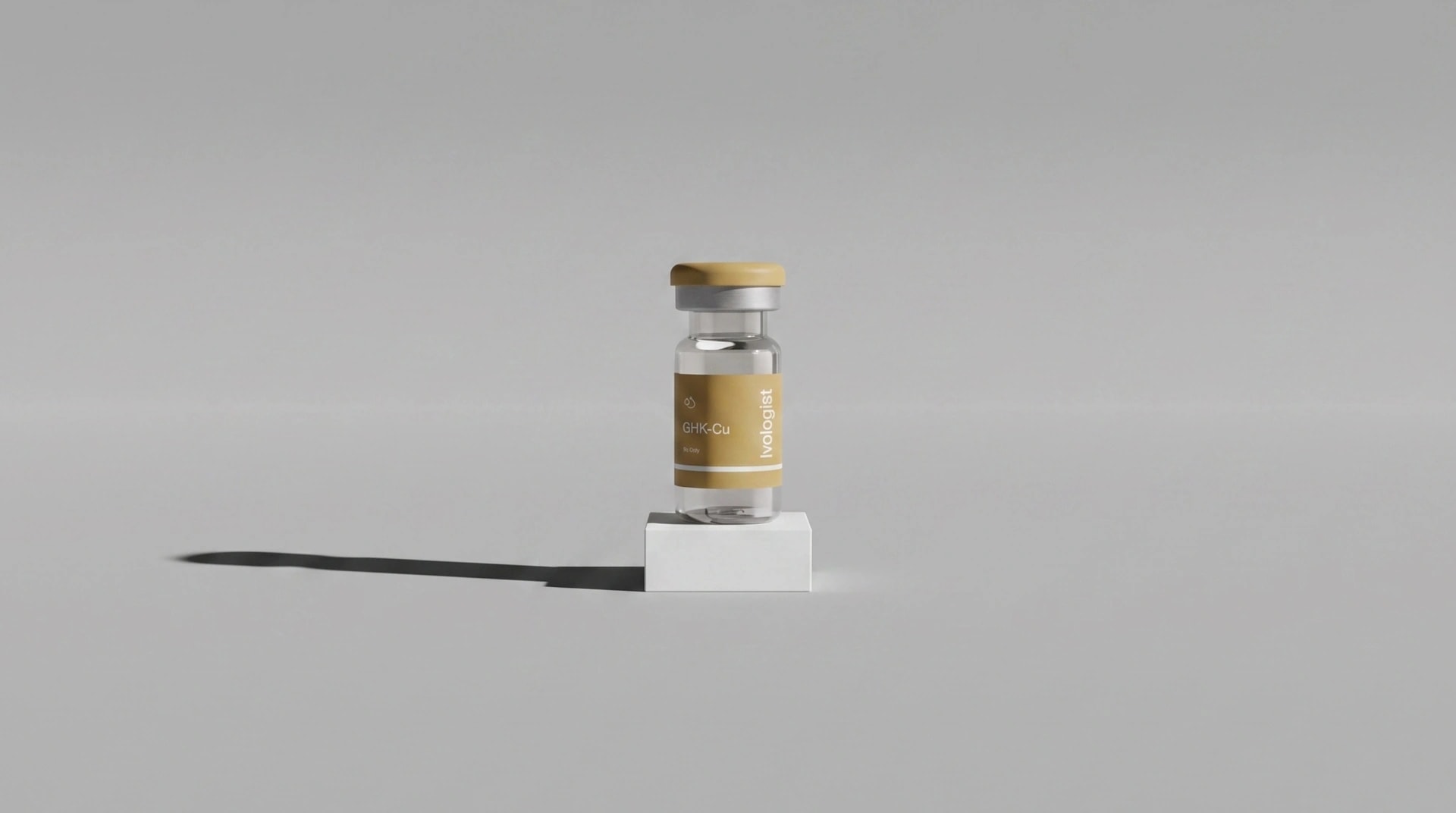
GHK-Cu is a tripeptide, three amino acids (glycine, histidine and lysine) joined together, carrying a copper ion. GHK occurs naturally in human plasma, saliva and urine, and its levels decline with age, which is a big part of why it gets framed as an anti-aging molecule. Loren Pickart, whose reviews on GHK span decades, proposes that the copper complex attracts repair cells to an injury and drives both the building and the breakdown of collagen.
That's a plausible mechanism, and it's where a lot of online content stops, but a mechanism in a dish only tells you what a molecule can do, not what it does in your skin at the dose in a bottle or a syringe.
What does GHK-Cu actually do for skin?
The skin and wound data is the most solid part of the story, even though it's still small. Pickart's 2015 review summarizes cosmetic studies in which GHK-Cu products improved skin firmness, elasticity and density and reduced fine lines and photodamage, which is why copper peptides sit in so many serums. The catch is that a 2026 evidence review by Mateescu and colleagues concluded that the historical cosmetic reports are "small or incompletely characterized," with one study of 13 people after laser resurfacing showing no benefit on objective measures.
Wound healing is where the animal work is strongest. In a controlled rat study, wounds treated with a topical GHK-Cu gel shrank by 64.5% over 13 days, compared with 28.2% in untreated wounds, and there's one older human trial worth knowing about: a 1994 randomized, placebo-controlled study in people with diabetic foot ulcers found faster closure with GHK-Cu gel on top of standard wound care. It's a real signal, but it's one trial from three decades ago, and no GHK-Cu drug has been approved since.

Does GHK-Cu regrow hair?
There isn't good evidence that GHK-Cu regrows hair in people, and most of the hair claim rests on lab and cosmetic data. The lab study usually cited for hair used AHK-Cu, a closely related copper peptide rather than GHK-Cu itself, and it showed longer hair follicles and more dermal papilla cell growth in a dish. The only recent human data the 2026 review found was a split-face eyebrow study of 18 people with positive cosmetic results, which didn't measure how much peptide actually reached the follicle.
That's a reasonable basis for more research and a thin basis for a purchase, and if thinning hair is what brought you here, the cause matters more than any single ingredient, so our guide to hormonal and metabolic causes of hair thinning is a better starting point.
Topical vs injectable GHK-Cu: what's the difference?
Topical and injectable GHK-Cu differ in evidence, regulation and risk, and most of the published research sits on the topical side.
| Factor | Topical (serum, cream, gel) | Injectable |
|---|---|---|
| Human evidence | Small cosmetic studies and one 1994 wound trial | FDA describes limited data in humans |
| FDA compounding status (September 2026) | Category 1, meaning under evaluation | Nomination withdrawn in April 2026, not in Category 1 |
| Main concerns | Product quality varies and long term data is thin | FDA flags possible immune reactions from aggregation and impurities |
The injectable column is the one to slow down on, because FDA said compounded GHK-Cu injections may pose a risk of immunogenicity, meaning your immune system could react to the peptide or its impurities.
Is the copper in GHK-Cu dangerous?
For most people the copper in a topical GHK-Cu product isn't the main concern, because it's bound to the peptide and applied to the skin rather than swallowed or injected. We couldn't find published reports of copper toxicity from topical GHK-Cu, but no one has studied long term injected use carefully enough to say the same for injections.
The clear exception is Wilson disease, an inherited condition in which the body can't clear copper properly, so it builds up in the liver, brain and other organs. If you have Wilson disease, or any condition your doctor has linked to copper handling, don't add a copper product of any kind without talking to the specialist who manages it.

Is GHK-Cu FDA approved?
No. As of September 2026, GHK-Cu isn't an FDA approved drug for any use, and its compounding status depends on the route. FDA's 503A list of nominated substances, updated May 14, 2026, places GHK-Cu "except for injectable routes of administration" in Category 1 while it's evaluated, after the injectable nomination was withdrawn in April 2026. FDA intends to take GHK-Cu to its Pharmacy Compounding Advisory Committee before the end of February 2027, so check the date on anything you read.
Any compounded medication, GHK-Cu included, isn't FDA approved, because FDA doesn't review compounded drugs for safety or effectiveness before they're dispensed.
Curious which peptides have evidence behind them?
Learn more about peptide therapy at Ivologist to see what each one is used for, what the evidence supports, and what a clinician-led evaluation involves.
Explore peptide therapyWhere does Ivologist fit?
Any peptide at Ivologist follows the same path: a medical evaluation first, with a licensed clinician deciding whether it's appropriate for you. For GHK-Cu specifically, that conversation is the right place to ask about route and realistic expectations, because the topical evidence and the injectable claims are not the same thing, and results vary. You can learn more about peptide therapy at Ivologist to see what an evaluation covers.

Frequently Asked Questions
Where to go from here
You now know where GHK-Cu's evidence is real (skin and wounds, in small studies) and where it's thin (injections, hair and anti-aging in general), and the gap between what's been shown on skin and what's being sold in a syringe is the thing worth asking about. If you'd like a licensed clinician to weigh it against your own history, that's what Ivologist is for.
Learn more about peptide therapy at Ivologist to see which peptides a licensed clinician can evaluate you for, what the evidence supports for each, and what a clinician-led assessment actually looks at.
Medical disclaimer. This article is for informational purposes only and doesn't constitute medical advice. GHK-Cu isn't FDA approved for any use, and compounded medications aren't FDA approved or reviewed by FDA for safety or effectiveness. Anyone with Wilson disease or another copper related condition should speak with their specialist before using any copper product. Results vary. Always consult a qualified healthcare provider before starting, changing, or stopping any treatment.