
Not all belly fat is the same fat, and tesamorelin is interesting because it seems to know the difference. It's the only peptide in this space with FDA approval and randomized trial data showing it reduces visceral fat, which is exactly why it's worth understanding what it does, what it doesn't, and who the evidence covers.
Why does visceral fat matter more than the fat you can pinch?
Visceral fat sits deep in your abdomen around the liver and intestines, and it's more closely tied to metabolic risk than the subcutaneous fat under your skin. When the Framingham Heart Study measured both with CT scans in 3,001 adults, visceral fat was more strongly linked to most metabolic risk factors, even after accounting for BMI and waist size. That's a difference most approaches to belly fat can't see, and neither can your scale.

What does tesamorelin do?
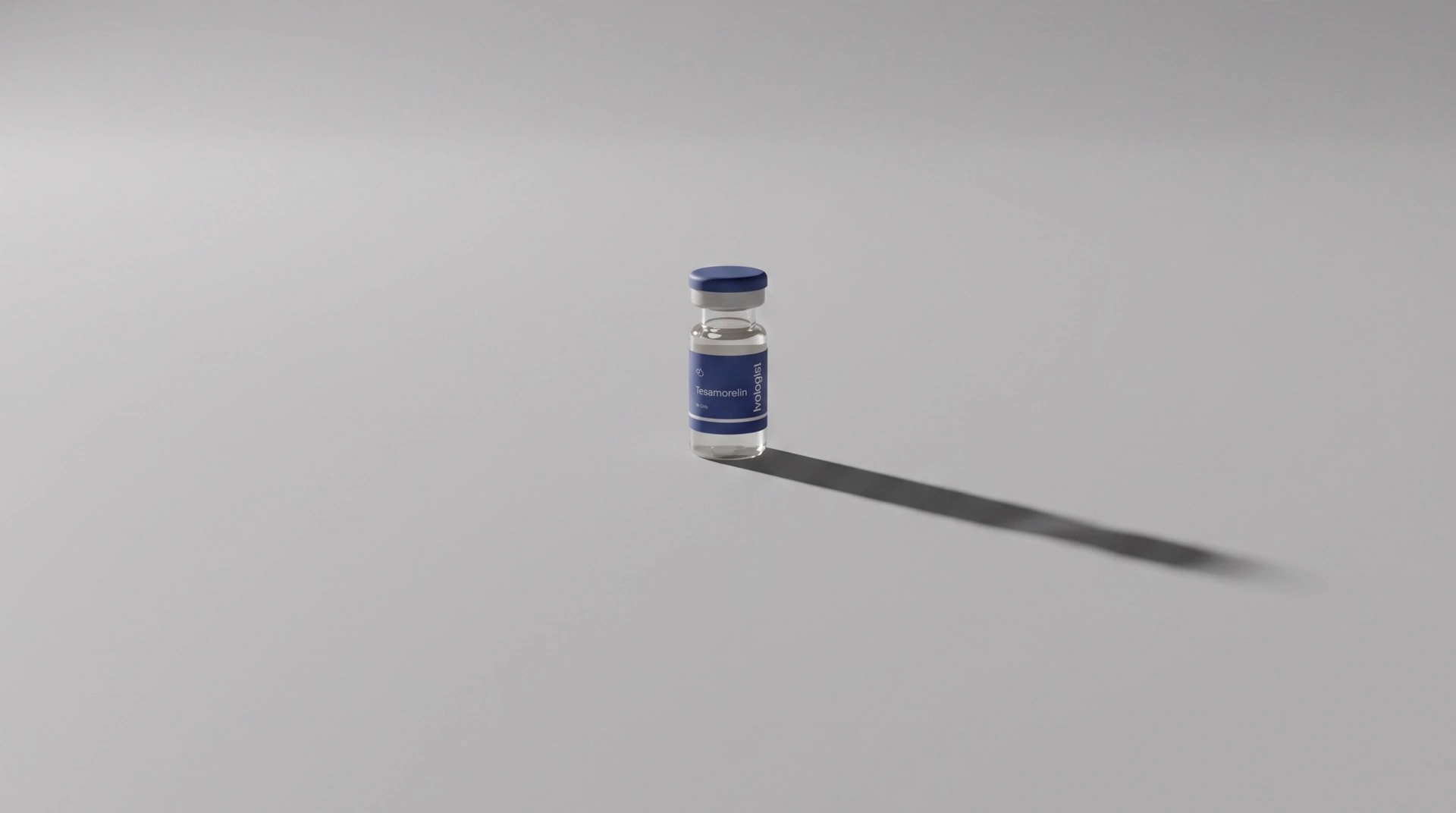
Tesamorelin is a synthetic version of growth hormone releasing hormone (GHRH), the signal your hypothalamus sends to tell your pituitary to release growth hormone. Your pituitary answers by releasing its own growth hormone in pulses, the way it normally would, and your liver answers that by making more IGF-1. In the first phase 3 trial, IGF-1 rose by 81% on tesamorelin and fell by 5% on placebo, which is the lab signal that the drug is reaching its target.
What did the tesamorelin trials show?
Tesamorelin reduced visceral fat in randomized, placebo-controlled trials, a higher bar than most peptides have cleared. The first phase 3 trial, published in 2007, gave 412 people with HIV and excess abdominal fat 2 mg of tesamorelin or placebo daily for 26 weeks, and visceral fat measured on CT fell by 15.2% on tesamorelin while rising 5.0% on placebo. A pooled analysis of both phase 3 trials, covering 806 people, found a treatment effect of about 15% at 26 weeks with no significant change in subcutaneous fat, and people who stayed on it for a year held their reduction at about 17.5%.
What about liver fat?
The same researchers then looked at the liver, since visceral and liver fat tend to travel together. A 2014 trial of 50 people with HIV found a modest drop in liver fat over six months, and a 12 month trial of 61 people with HIV and fatty liver disease found a 37% relative reduction compared with placebo. Both were small, and the authors called for longer studies, so this is a promising signal rather than a new use.

Wondering whether a peptide fits your goals?
A licensed clinician reviews your history, labs and goals before recommending anything, including whether a peptide makes sense at all.
Explore peptide therapyWhat happens when you stop tesamorelin?
The visceral fat comes back. In the trial extensions, people who'd taken tesamorelin for 26 weeks were randomized again, and those switched to placebo saw visceral fat rise by 22% and 16% over the next 26 weeks while those who continued held their results. The label also asks prescribers to reconsider continuing in anyone whose visceral fat hasn't dropped, so tesamorelin is an ongoing therapy that has to keep earning its place, not a course that resets your body.

Is tesamorelin a steroid, HGH or a GLP-1?
Tesamorelin isn't any of the three, although it gets lumped in with all of them. It's a peptide, a chain of 44 amino acids, rather than a cholesterol based steroid like testosterone, and unlike HGH it works one step upstream, so your own feedback system still shapes how much growth hormone is released. It also differs from a GLP-1 like semaglutide, because its label says it isn't for weight loss: its effect on weight is neutral, and in the trials average weight moved by less than a kilogram.
| Factor | Tesamorelin | HGH | GLP-1 (semaglutide) |
|---|---|---|---|
| Type | GHRH analogue peptide | Growth hormone itself | GLP-1 receptor agonist |
| How it works | Your pituitary releases its own growth hormone | Supplies growth hormone directly | Acts on appetite and blood sugar signals |
| Relevant FDA approval | Excess abdominal fat in adults with HIV and lipodystrophy; weight neutral | None for visceral fat | Reducing excess body weight (Wegovy) |
Does tesamorelin work for people without HIV?
We can't say with the same confidence, because almost all of the evidence comes from people with HIV. One randomized trial gave 60 adults with abdominal obesity and reduced growth hormone secretion tesamorelin or placebo for 12 months, and visceral fat fell without a significant change in subcutaneous fat or blood sugar. That's encouraging, but it's one small trial in a group chosen for low growth hormone, so any use outside HIV associated lipodystrophy is off-label, a prescriber's judgement rather than an approved indication. Compounded tesamorelin isn't FDA approved either, because the FDA doesn't review compounded drugs for safety or effectiveness, and peptides sold online "for research use" aren't made for people at all.
Where Ivologist fits
Ivologist's role is to decide with you whether a growth hormone pathway peptide makes sense, and to watch it closely if it does. The label rules tesamorelin out during pregnancy, with an active cancer, or after pituitary surgery, radiation or head trauma, and it calls for IGF-1 monitoring and glucose checks before and during use, noting that long-term cardiovascular safety hasn't been established. A licensed clinician works through those questions with your labs in hand and may also discuss sermorelin, another GHRH analogue on the same pathway (Ivologist's sermorelin is compounded and not FDA approved), or the broader hormone optimization program.

Frequently Asked Questions
Where to go from here
Tesamorelin has the strongest evidence of any peptide for visceral fat, and that evidence has clear edges around who was studied, how long the effect lasts and what needs watching. The fat that matters most is the fat the scale can't see, which is why the measuring matters as much as the medicine.
Learn more about peptide therapy at Ivologist to see which peptides a licensed clinician can evaluate you for, what the assessment involves, and how tesamorelin compares with the alternatives. Nothing is recommended until your history and labs have been reviewed.
Medical disclaimer. This article is for informational purposes only and doesn't constitute medical advice. Tesamorelin is FDA approved only to reduce excess abdominal fat in adults with HIV and lipodystrophy; other uses are off-label, and compounded medications aren't FDA approved. Results vary. Always consult a qualified healthcare provider before starting, changing, or stopping any treatment.