Patient guide · Compounded semaglutide & tirzepatide
Dosing, made simple.
Units, concentration, and drawing up a dose can feel confusing the first time. This guide walks you through storing, preparing, and injecting your compounded medication, step by step. It's a general reference. Your prescription label and your Ivologist provider always come first.
Have your vial and its label with you as you read.
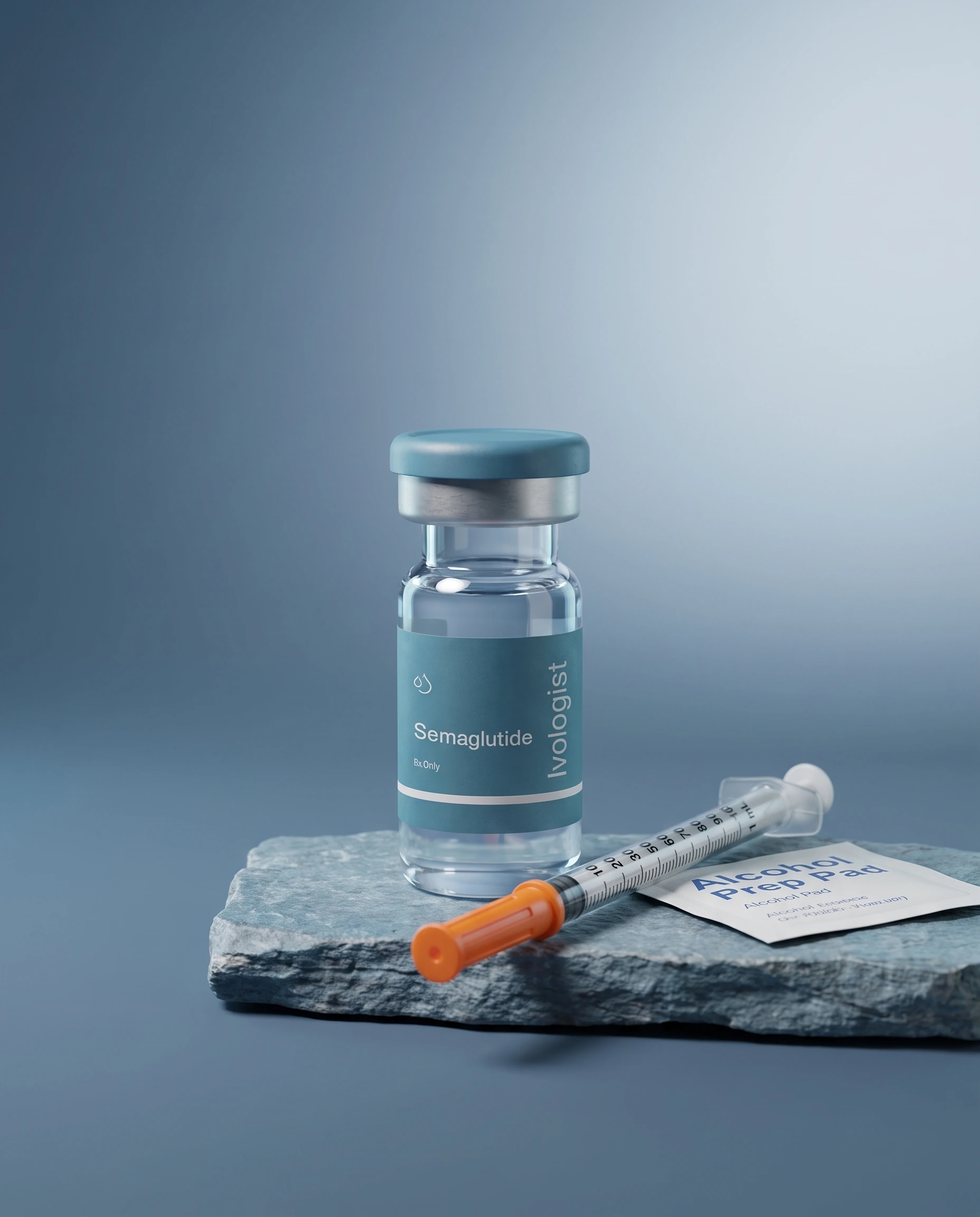
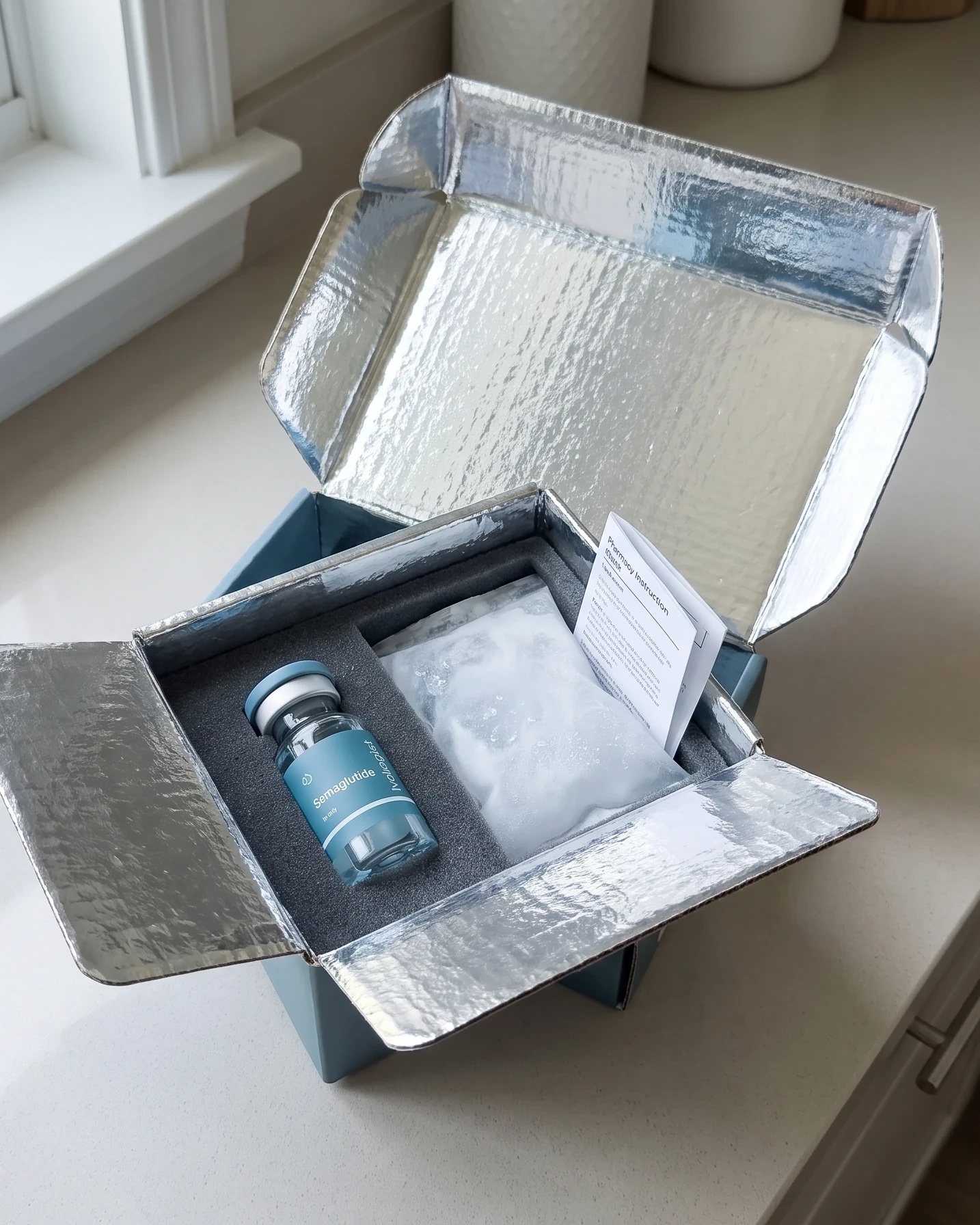
Storage
When your medication arrives
Your medication ships from a U.S.-licensed compounding pharmacy in cold-pack packaging. It may feel warm when it arrives; that's expected and covered below. Storage instructions can vary slightly by pharmacy, so always follow the directions printed on your label.
- 1
Unpack it right away.
Take the vial out of the packaging and check that the seal is intact. A warm vial or warm gel packs are normal; see the temperature note below.
- 2
Photograph your vials within 48 hours.
Take a clear photo of each vial and its label within 48 hours of delivery and email it to pharmacy@ivologist.com. Our pharmacy team checks the dating on your vials against your program and will reach out if anything needs replacing. Don't throw any medication away on your own; ask us first.
- 3
Refrigerate it, away from light.
Keep it between 36°F and 46°F (2°C to 8°C). Never freeze it. If your fridge has a light that stays on, keep the vial in its box or an opaque container.
Temperature
A warm package is normal.
Our compounding pharmacy, Creative Compounding Rx, has completed stability and temperature-excursion studies: the medication can be shipped at up to 104°F (40°C) for 7 consecutive days without affecting its potency or safety.
Put the vial in the refrigerator as soon as it arrives, unless your provider tells you otherwise.
Warm gel packs or packaging are not a sign of compromised quality.
If your vial comes from a different pharmacy, follow the storage directions on its label.
Handle with care
Handle vials and syringes carefully. Glass can break and needles can cause injury.
Keep medication and supplies out of reach of children and pets.
If your shipment arrives damaged or leaking, or a seal is broken, text us at (210) 436-8822 within 48 hours of delivery and include it in your vial photos to pharmacy@ivologist.com.
Injection sites
Where to inject
Your provider can help you choose the site that works best for you. Whichever you choose, rotate sites every week. Injecting the same spot repeatedly can cause lumps, scar tissue, and uneven absorption.
Rotate your injection site every week.

Stomach · At least 2 inches away from your belly button.
Prefer to watch?
A nurse walks through a full semaglutide injection, from the supplies in the box to the sharps container.
Your dose is the one on your label, not the one in the video.
Units
How much to draw
Draw up to the number of units printed on your prescription label. Not milligrams. Units.
Your label lists your dose in units because your syringe is marked in units. Compounded medication comes in different concentrations depending on the pharmacy, so the same milligram dose can be a different number of units from one vial to the next. That's why the label on the vial in your hand is the only number to follow.
If the units on your label don't match the dose in your treatment plan or portal, text us before you inject.
A standard 1 mL insulin syringe holds 100 units. Read your dose at the top edge of the black stopper.
Things to know
- Draw up your dose right before you inject. Do not pre-fill syringes.
- You can let the vial sit at room temperature for 15 to 30 minutes first. Cold medication stings more going in.
- Use a new syringe every time. Never reuse or share needles.
- Rotate your injection site weekly.
Be careful
- Avoid injecting into bruises, scabs, scars, moles, or anywhere you've had a recent vaccination, injection, or procedure.
- Minor bruising, redness, or tenderness at the site is normal and should fade within a day or two.
- A hard lump, spreading redness, warmth, or pain that gets worse is not normal. Text us.
Step by step
How to inject, step by step
Always follow the instructions on your prescription label. These steps are a general guide.
- 1
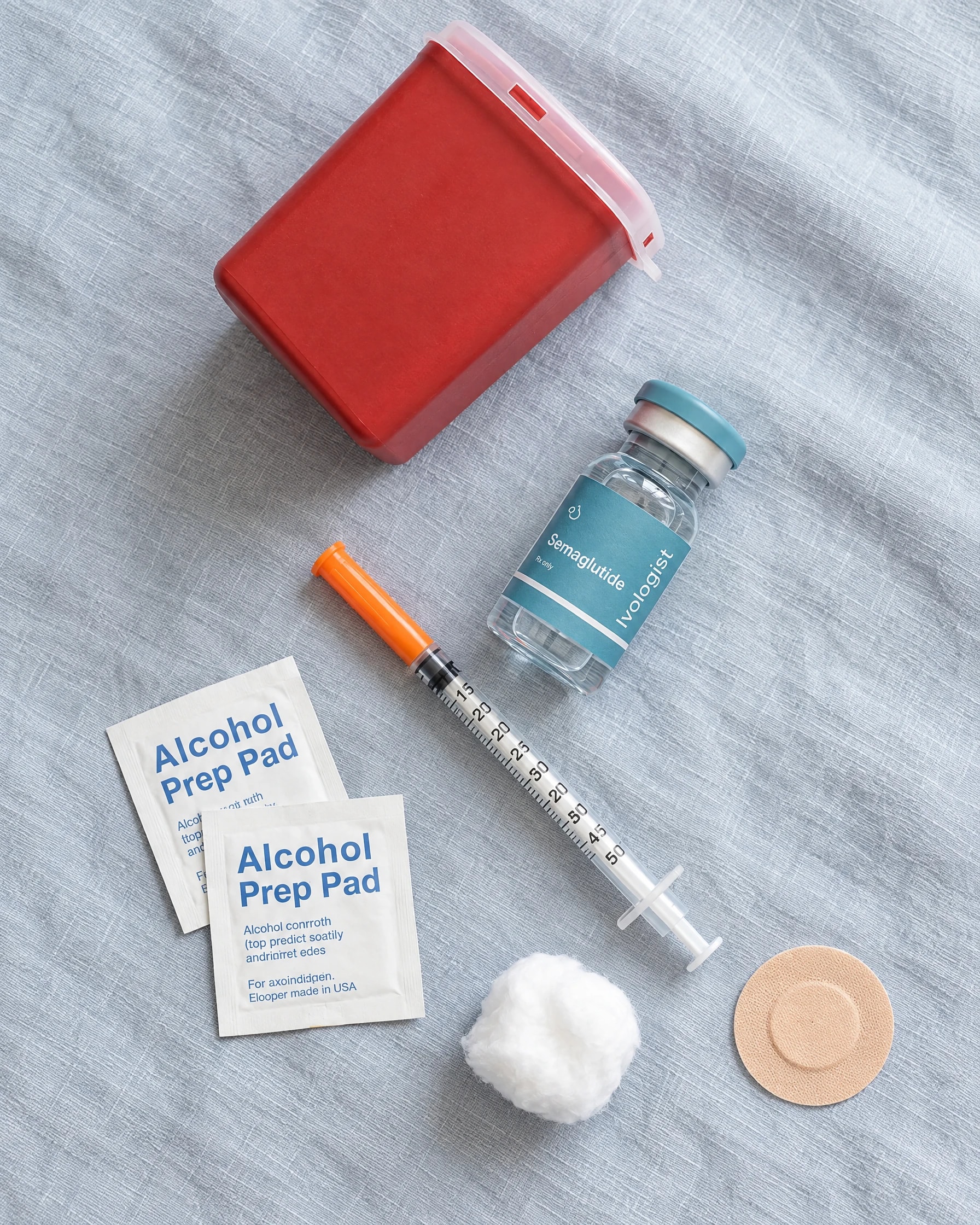
Check your label.
Confirm your dose in units and any pharmacy-specific storage notes.
- 2
Wash your hands.
Soap and warm water, for 20 seconds.
- 3
Gather your supplies:
- Medication vial
- A new syringe with needle
- Two alcohol wipes
- A cotton ball or small bandage
- Your sharps container
- 4
Clean the vial top and your skin.
Wipe the rubber top of the vial with one alcohol wipe and your injection site with another. Let both air-dry.
Some vials have a full metal cap. Flip off only the small centre disc and leave the metal ring around the rubber in place.
- 5
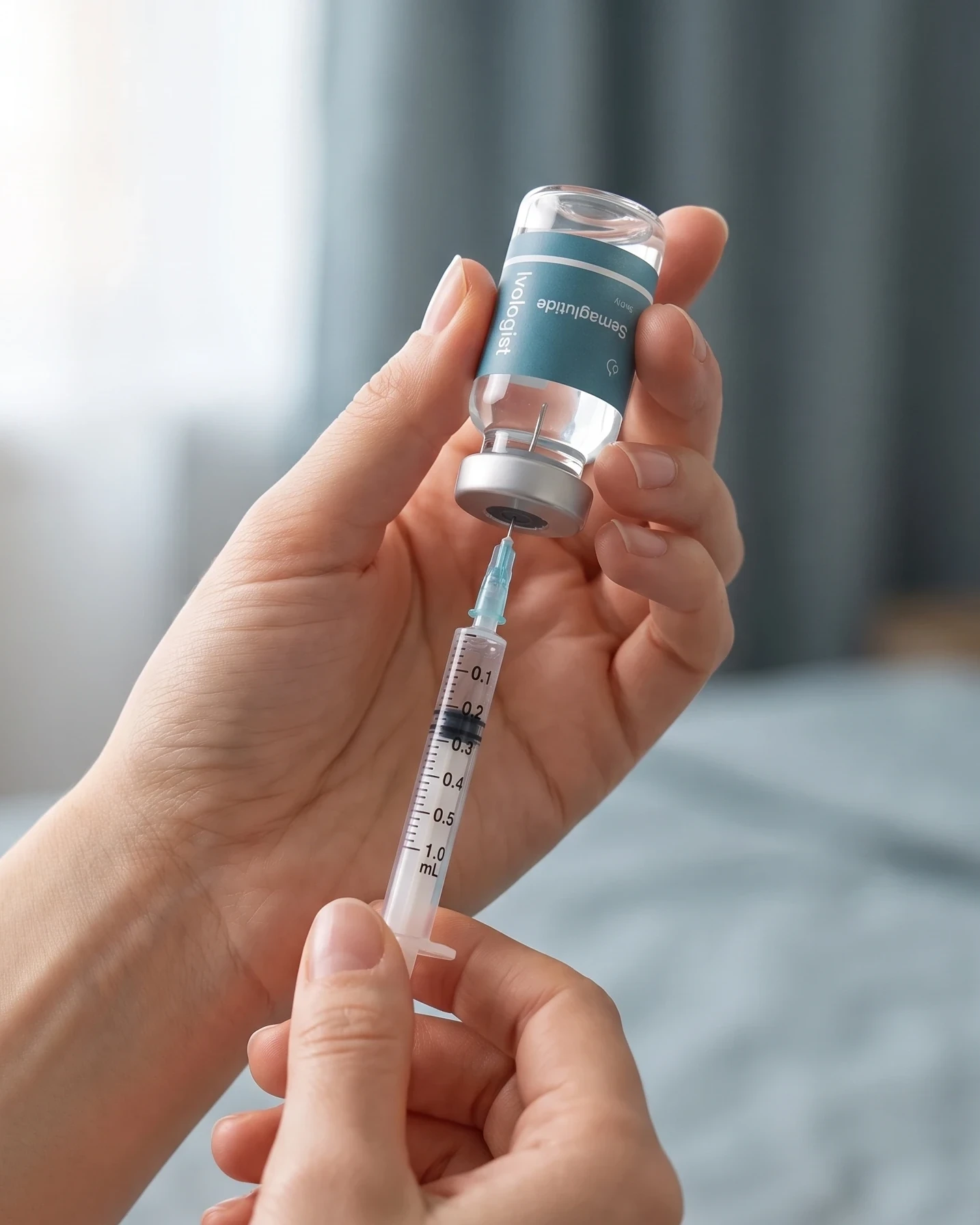
Draw up your dose.
- Remove the cap from the needle.
- Pull the plunger back to draw air into the syringe, up to your dose in units.
- Push the needle straight down through the centre of the rubber vial top.
- Push the plunger down to inject the air into the vial. This makes the medication easier to draw.
- Turn the vial and syringe upside down together, keeping the needle tip in the liquid.
- Slowly pull the plunger back until the top of the black stopper lines up with your dose in units.
- Tap the syringe gently so any air bubbles rise to the top, then push the plunger slightly to send the air back into the vial. Re-check the dose.
- Pull the needle out of the vial.
- 6
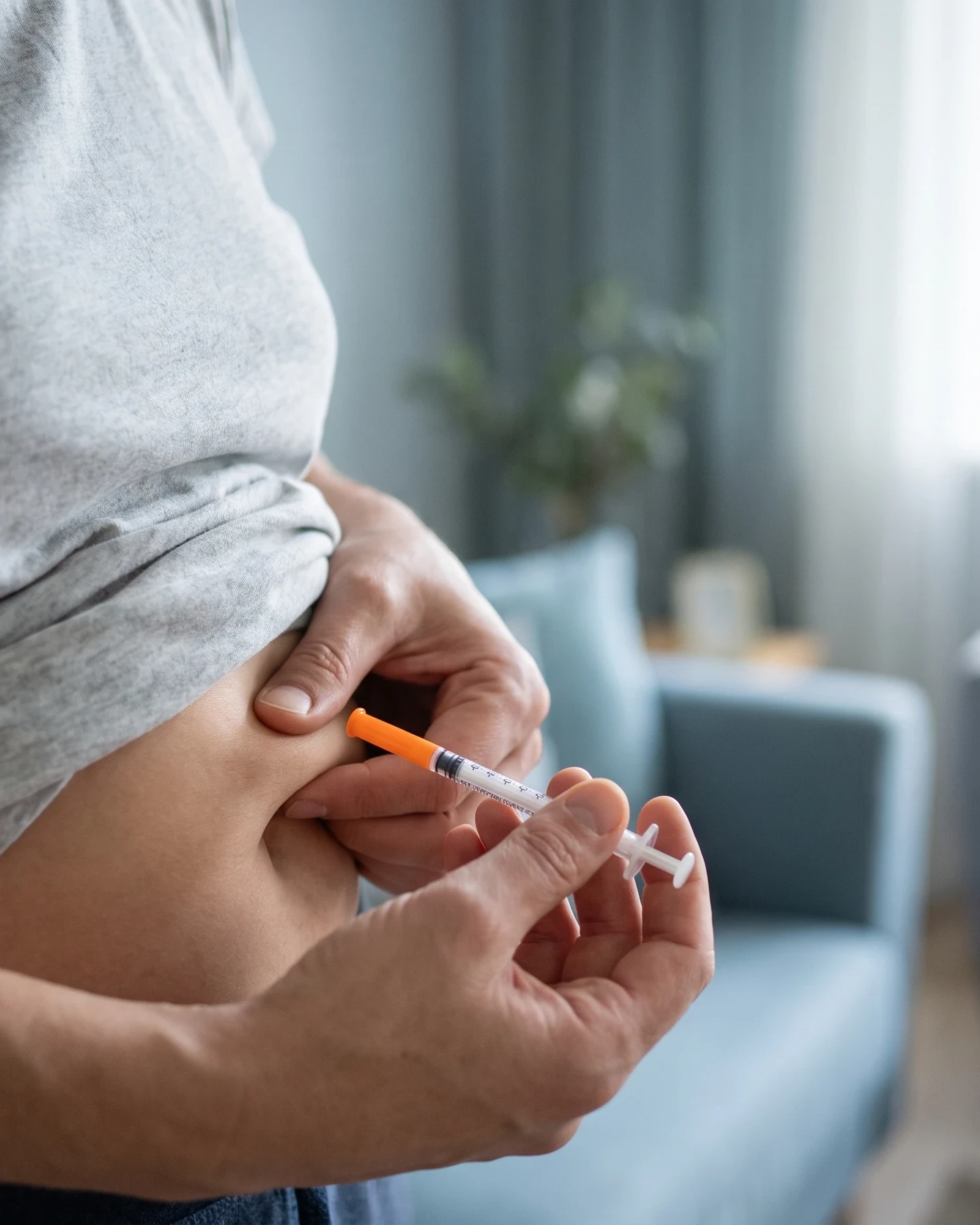
Inject.
- Gently pinch a fold of skin at your cleaned site.
- Insert the needle straight in at a 90-degree angle with one quick motion.
- Press the plunger down slowly and steadily until the syringe is empty.
- Release the pinch and pull the needle straight out. Don't pull back on the plunger.
- Press lightly with a cotton ball or tissue. Don't rub. Add a bandage if there's a drop of blood.
- 7
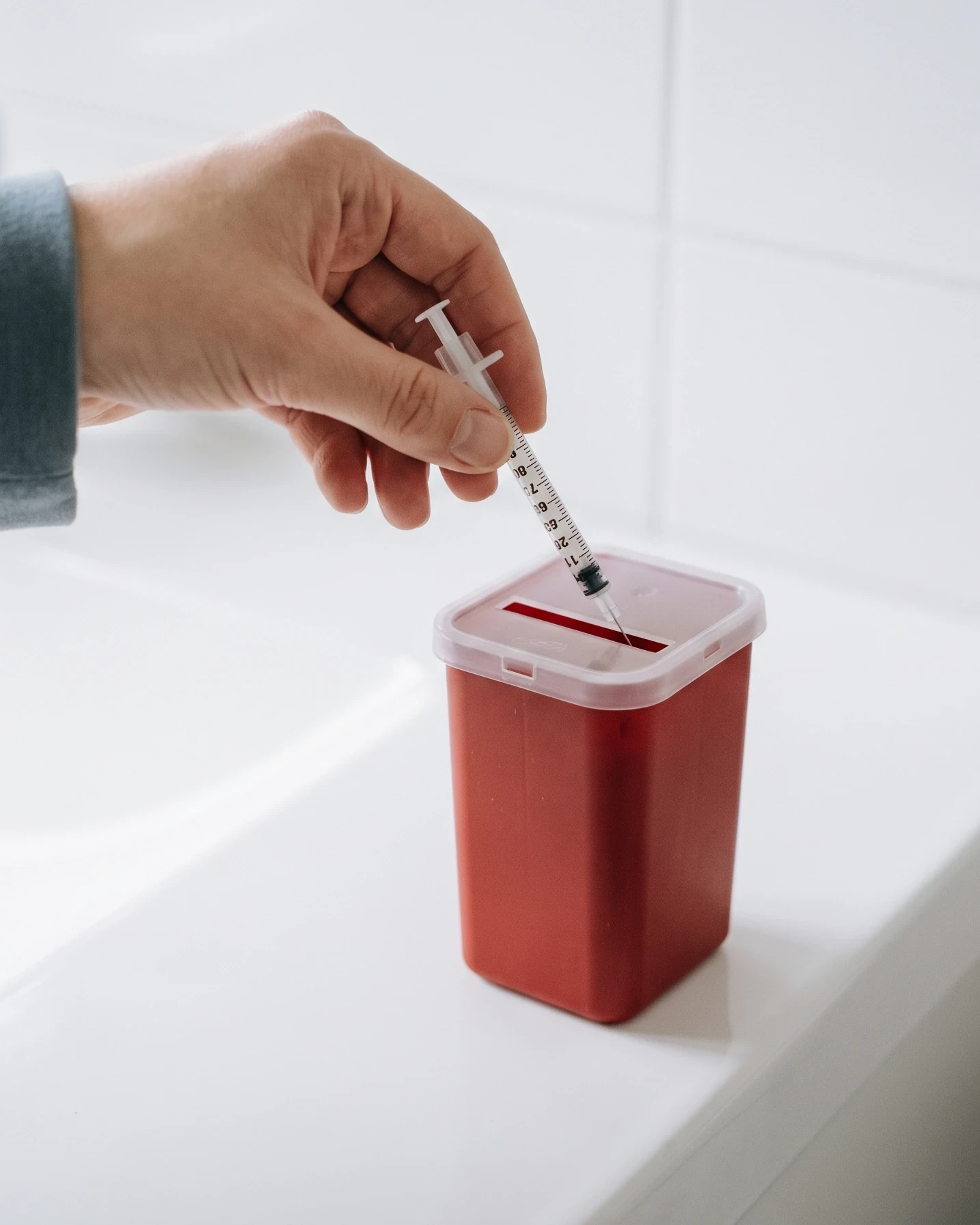
Dispose safely.
Put the used syringe, needle still attached, straight into your sharps container. Never recap or reuse it.
Frequently Asked Questions
Your medication may come from a different licensed compounding pharmacy from one refill to the next, depending on your state and availability. It's the same active ingredient, but the concentration and the additive can differ, so your dose in units may change even though your milligram dose hasn't. Read the new label every time and follow the units printed on it. If anything looks different from what you expect, text us before you inject.
Your prescribed dose is in milligrams (mg). Concentration is how many milligrams are in each millilitre of the vial (mg/mL), and it's set by the pharmacy, not your provider. Units are the marks on your syringe: a standard 1 mL insulin syringe holds 100 units, so 10 units is 0.1 mL. The pharmacy does the maths and prints your dose in units on the label. If you'd like to check it yourself: units = (dose in mg ÷ the vial's mg/mL) × 100. A higher-concentration vial means fewer units for the same dose, which is why the number can change between refills.
Compounded semaglutide and tirzepatide vials usually include a small amount of vitamin B12 or L-carnitine alongside the active ingredient. Which one depends on the pharmacy, and it's listed on your label. These additives are common in compounded GLP-1 formulations and don't change your semaglutide or tirzepatide dose. If you have a known allergy or sensitivity to anything on the label, tell your provider before your first injection.
Semaglutide: if it's within 5 days of your usual day, take it and continue on your normal schedule. Tirzepatide: within 4 days. If it's later than that, skip the missed dose and take the next one on your usual day. Never take two doses to catch up. If you've missed more than one dose, text us before restarting. Your provider may want to adjust your dose.
Put every used syringe, needle still attached, into an FDA-cleared sharps container or a heavy-duty plastic container with a screw-on lid, such as an empty laundry detergent bottle. Never put loose needles in household trash or recycling. When the container is about three-quarters full, seal it and follow your local disposal rules. Many pharmacies and community sites accept sealed sharps containers.
Still have questions? Contact us
Support
Still have questions?
Text your care team for refills, questions, or anything that doesn't look right.
Monday to Saturday, 9am to 6pm CT. Text only, for existing patients.
Refill questions: refill@ivologist.com

Your care, in one place
Message your provider, see your treatment plan, and manage refills in the Patient Portal.
Open the Patient PortalNot a patient yet?
Start with care designed for you
Compounded semaglutide and tirzepatide programs guided by licensed clinicians, with supplies and shipping included.
This guide is for informational purposes only and does not replace the instructions on your prescription label or the advice of your Ivologist provider. Compounded medications are prepared by licensed partner pharmacies and are not FDA-approved. Always confirm your medication's concentration and dose with your prescribing provider or pharmacist before injecting.