
You're doing the same things you did in month two, same injection, same way of eating, and the scale has stopped moving anyway. A GLP-1 plateau feels like the medication has quit on you, but it's usually your body settling at a new, lower weight, which is a different problem with different answers. Below are the six most common reasons weight loss stalls on semaglutide or tirzepatide, and what tends to get things moving again.
Why has my GLP-1 stopped working?
In most cases it hasn't stopped working; it's working against a body that now weighs less and pushes back harder. In STEP 1, adults on semaglutide 2.4 mg lost an average of 14.9% of their body weight over 68 weeks, and in SURMOUNT-1 those on the highest tirzepatide dose lost an average of 20.9% over 72 weeks, yet in both the average curve fell steeply for months and then flattened. That flattening is the plateau: the point where the medication's effect and your body's defense of its weight roughly balance.
So the useful question isn't whether the drug still works but which part of that balance has shifted for you. If you're on semaglutide specifically, our guide to why semaglutide isn't working goes deeper, and for microdosing as a route through a stall, see the GLP-1 receptor reset guide.
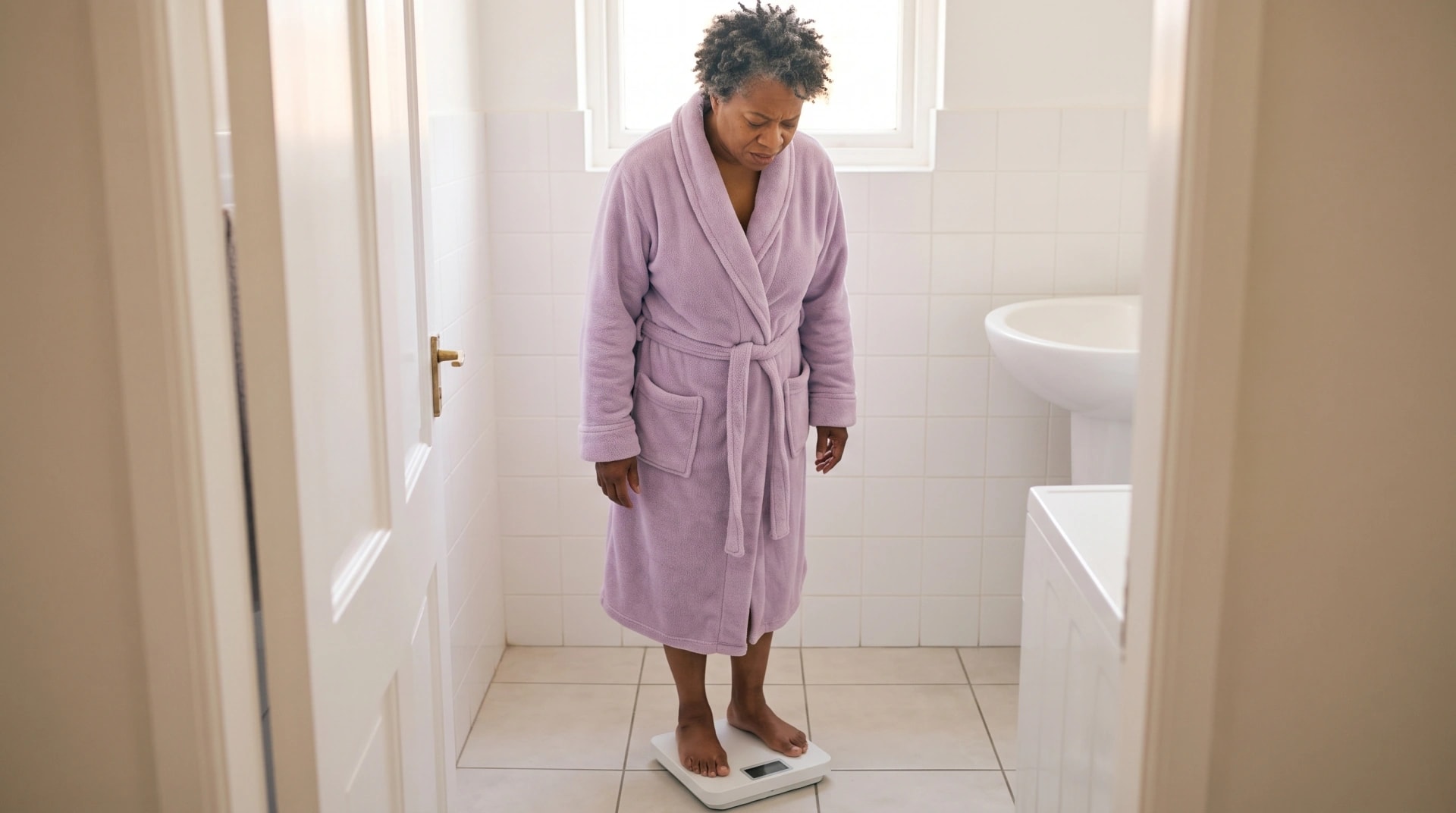
The 6 reasons weight loss stalls on a GLP-1, and what can help restart it
These six often overlap, so read all of them before deciding which sounds like you.
1. Your body needs less energy than it did
A smaller body burns less fuel because there's less of it to move and maintain, so portions that produced steady loss at your starting weight can be close to maintenance now. The lever is recalibrating, not restricting harder: have your clinician or coach re-estimate what your body needs today.
2. You're at a dose stage, not a ceiling
Your titration stage shapes how strongly the medication acts on appetite, and in the trials it took 16 weeks to reach the full semaglutide dose and 20 for tirzepatide. A stall during a long hold at a lower dose differs from one at your maintenance dose, and whether to change anything is your clinician's call.
3. Your appetite is coming back
Appetite rises as weight comes off, more than most people expect. A 2016 analysis in Obesity estimated that for every kilogram lost, people ate about 100 calories a day above their old baseline, more than three times the drop in energy they burned. A GLP-1 dampens that pull, but it can still show up as evening snacking or portions creeping back. A week of writing down what you eat usually tells you whether this is your cause.

4. You're losing muscle along with fat
Any calorie deficit takes some muscle with it, and since muscle helps keep your energy needs up, losing more than necessary can make further loss harder. Protein at every meal and regular resistance training protect it, and our guide to preventing muscle loss on a GLP-1 goes into the detail.
5. Your sleep or stress has changed
Short sleep changes what kind of weight you lose. In a small controlled study, people on the same reduced calorie diet lost less than half as much fat on 5.5 hours of sleep as on 8.5, lost more lean mass, and felt hungrier. Stress feeds into both sleep and eating, so if your stall lines up with a hard few months, tell your clinician rather than pushing through; our piece on whether poor sleep stops weight loss covers where to start.

6. Something medical is working against you
Some common prescriptions, including certain diabetes and depression medications, can promote weight gain, which the Endocrine Society's obesity guideline flags for review. Thyroid function and other labs are worth checking too. Don't stop a prescription on your own; bring the full list to your clinician.

Has your weight stalled on a GLP-1?
A clinician-led evaluation looks at your labs, dose and habits together to find what's changed.
Book a discovery callShould I switch from Ozempic to Mounjaro or Zepbound?
Switching can make sense for some people, but it's a decision to make with your clinician once the six causes above have been looked at. In SURMOUNT-5, a 72 week head to head trial published in 2025, adults with obesity on their highest tolerated dose of tirzepatide lost an average of 20.2% of their body weight, compared with 13.7% on semaglutide. That's a reason to consider tirzepatide when semaglutide has stalled at a full dose, but it isn't a promise for any one person, and a switch won't change appetite drift or short sleep. (Ozempic and Mounjaro are the type 2 diabetes versions; Wegovy and Zepbound are the weight management versions of the same drugs.) Our comparison of semaglutide vs tirzepatide covers the other differences, alongside how Ivologist prescribes tirzepatide.

Will I regain the weight if I stop?
Many people do, which matters before you decide a plateau means the medication isn't worth continuing. In the STEP 1 extension, people who stopped semaglutide after 68 weeks regained about two thirds of their lost weight within a year. STEP 4 showed it from the other side: after 20 weeks on semaglutide, those who continued lost a further 7.9% over 48 weeks, while those switched to placebo regained 6.9%. A plateau at a lower weight is still the medication doing its job, because holding that weight is part of what it does, and our guide to GLP-1 maintenance covers the longer term.

How the Stubborn Weight Loss Program works through a GLP-1 plateau
Ivologist's Stubborn Weight Loss Program is built for people who've been consistent on semaglutide or tirzepatide and stopped seeing the scale move. It starts with a clinician-led evaluation: a medical intake and review of what you've tried, a nurse consultation, an advanced metabolic lab panel, functional health coaching, and a provider consultation once labs are back, ending in a summary of findings and recommendations. The program is then shaped around those findings, from GLP-1 strategy adjustments to nutrition, stress and recovery work, with six health coaching sessions and ongoing clinician oversight. Every recommendation is discussed with you first, and it's explicitly not automatic medication escalation.

Frequently Asked Questions
Where to go from here
A GLP-1 plateau usually means your body has changed, not that the treatment has stopped working, and the next step is finding out which of the six causes is yours. The scale stopped for a reason, and a clinician-guided review is how you find it.
Book a discovery call for the Stubborn Weight Loss Program and a licensed clinician will look at your history, your labs and your current plan before recommending anything.
Medical disclaimer. This article is for informational purposes only and doesn't constitute medical advice. GLP-1 medications require evaluation and a prescription from a licensed provider, and compounded GLP-1 medications aren't FDA approved (the FDA doesn't review compounded drugs for safety or efficacy). Results vary. Always consult a qualified healthcare provider before starting, changing, or stopping any treatment.