
1. What people actually describe
“I feel bloated after I eat, and no matter what I do, my stomach just never feels normal. I am constantly craving sugar and carbs, feeling tired, brain fog, and all of these symptoms are making it hard to function throughout the day.”
“When I search my symptoms online, I find a ton of checklists stating that I might have candida, but they all lead to a link that tries to influence me to buy something. One site recommends a test kit, another a cleanse, and the other a supplement, and I get so confused on what route to go.”
That confusion is the problem this article is about. The clinical research gives a clearer answer than any checklist can, and it starts with an uncomfortable finding.
2. What candida overgrowth actually is
The recognized clinical entity is small intestinal fungal overgrowth, or SIFO: an excessive number of fungal organisms in the small intestine occurring alongside gastrointestinal symptoms. It is documented in people with normal immune function, not only in those who are immunocompromised. Two studies of consecutive patients presenting with unexplained gastrointestinal symptoms found SIFO in 26% and 25.3% of them. [2]
That is a substantial minority, and it is a reason to take the question seriously rather than dismiss it. It is also a reason to be careful.
“If candida is not actually the cause of your symptoms, you could spend months following a protocol your body never needed in the first place. The real reason you are feeling this way may be getting overlooked, and not getting to the root cause of why these symptoms are happening in the first place.”
3. Why symptoms cannot diagnose it
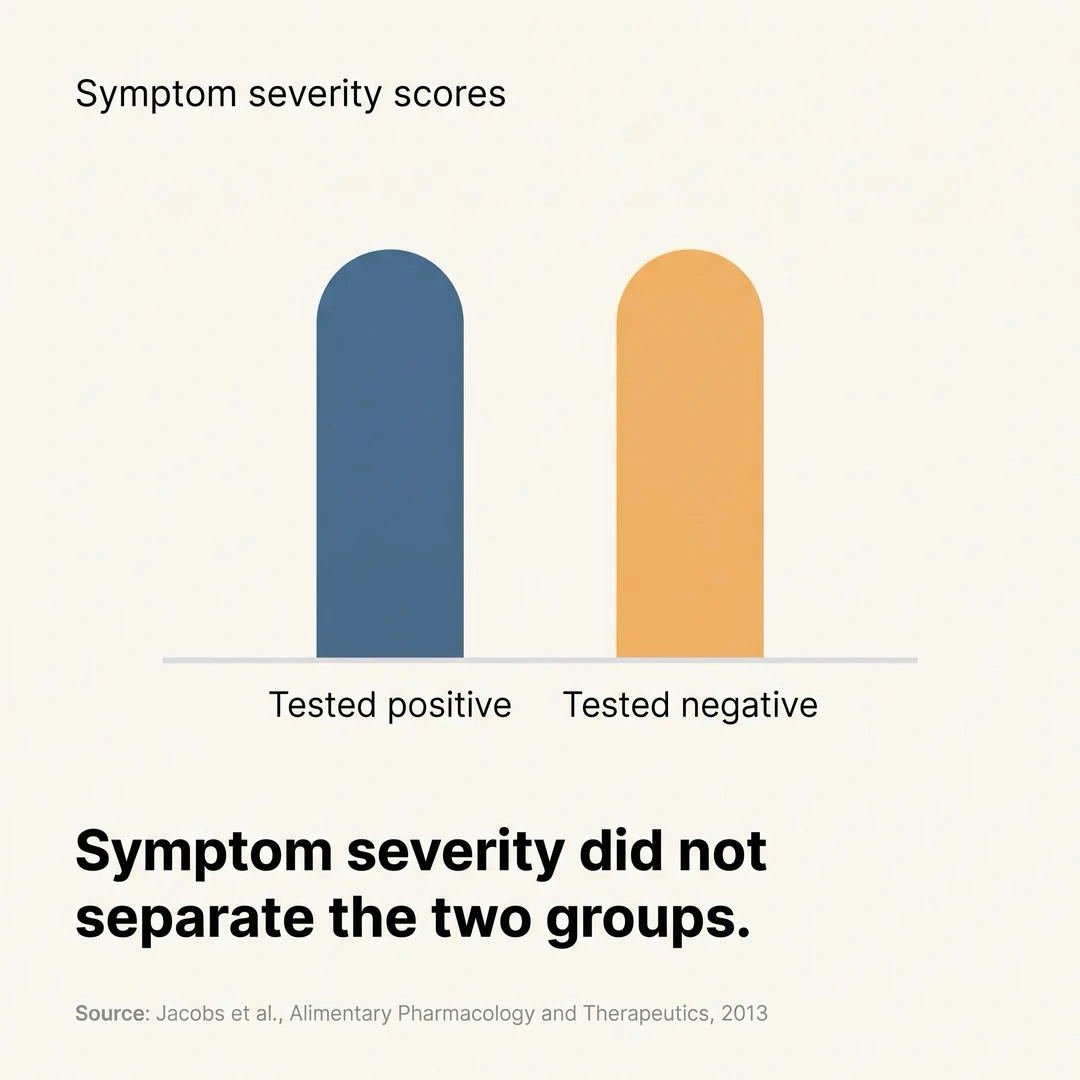
A study published in Alimentary Pharmacology and Therapeutics had patients complete a validated symptom questionnaire before testing, allowing researchers to compare symptom severity against culture results. The authors concluded that diagnosis of overgrowth requires testing because symptoms were poor predictors of overgrowth. [1]
People who turn out not to have fungal overgrowth report much the same complaints as people who do. Bloating, fatigue, brain fog and altered bowel habits are produced by a long list of conditions, several considerably more common than SIFO.
“These symptoms do not always point to one clear diagnosis,” says Samantha Alonso, a board-certified nurse practitioner at Ivologist. “That is where looking at the whole clinical picture and asking what else could be contributing becomes really important.”
Table 1. Conditions that produce overlapping symptoms
| Condition | Shares which symptoms | How it is distinguished |
|---|---|---|
| Small intestinal fungal overgrowth | Bloating, gas, altered bowel habit, fatigue | Small intestinal aspirate culture |
| Small intestinal bacterial overgrowth | Bloating, gas, altered bowel habit | Breath testing or aspirate culture |
| Celiac disease | Bloating, fatigue, altered bowel habit | Serology and biopsy |
| Irritable bowel syndrome | Bloating, pain, altered bowel habit | Clinical criteria, exclusion of other causes |
| Food intolerance | Bloating, gas, fatigue | Structured elimination and reintroduction |
Symptom overlap per references 1 and 2. This is not a diagnostic tool; it illustrates why a symptom list cannot separate these conditions.
4. What is actually worth looking at
“Since these symptoms alone cannot tell us whether candida is the problem, we need to look deeper at what else might be causing it. There are four important things worth addressing before assuming candida is the issue.”

Antibiotics
A 2026 narrative review examined 26 studies, 16 in animals and 10 in humans, and found antibiotics consistently associated with increased gastrointestinal Candida albicans colonization. The largest increases came from broad-spectrum agents active against anaerobic bacteria. [3] Resident gut bacteria normally restrain fungal expansion by competing for nutrients and binding sites, a process called colonization resistance. Antibiotics weaken that restraint. [4]
Proton pump inhibitors and gut motility
Both were identified as independent risk factors in the Alimentary Pharmacology and Therapeutics study, and were present in more than half of the patients with unexplained gastrointestinal symptoms. [1] Stomach acid and normal motility each limit how much survives and settles in the small intestine.
Blood sugar
High blood glucose promotes yeast attachment and growth and interferes with immune response. [6] One pattern comes up often enough in clinical practice to be worth naming.
“I would have women who were overweight or obese come in with recurrent vaginal yeast infections, and there were often other signs of insulin resistance when you looked at the whole picture: acanthosis nigricans, irregular periods, obesity, and sometimes already a history of prediabetes,” says Alonso.
“The recurrent yeast infections were not how I diagnosed insulin resistance or diabetes, but they were definitely a clue that made me look deeper, especially when those other signs were there. In some patients that workup ultimately identified insulin resistance or previously undiagnosed diabetes.”
The published evidence here concerns vaginal rather than gut candidiasis, and that distinction matters. A nationwide cohort of more than 1.8 million women followed for 12 years found diabetes incidence of 3.06 per 1,000 person-years in women without prior vulvovaginal candidiasis, against 4.05 in women with it, a hazard ratio of 1.41 after adjustment. The mean interval between the infection and the diabetes diagnosis was 0.57 years. [5] The CDC's treatment guidelines list diabetes among the underlying factors in recurrent vulvovaginal candidiasis. [7]
None of this means gut candida predicts diabetes. No study shows that. What it means is that in a person who gets recurrent yeast infections alongside gut symptoms, particularly with other signs of insulin resistance, blood sugar is worth checking.
“I often observed that the frequency of the yeast infections decreased as their metabolic health and glycemic control improved,” says Alonso.
Where insulin resistance is part of the picture, addressing metabolic health is the root-cause approach, and GLP-1 medications are among the tools used for that. There is no evidence that they treat or prevent candida.
Something else entirely
Bacterial overgrowth, celiac disease, functional gut disorders and food intolerance all produce the same complaints and are more common than fungal overgrowth.
5. How it is properly diagnosed
Diagnosis requires aspirating fluid from the small intestine during an upper endoscopy and culturing it. [2] That is more involved than any at-home test, and it is the reason this condition is under-investigated rather than over-diagnosed.
A 2026 study compared duodenal and jejunal aspirates taken in sequence from 57 patients. Using jejunal aspirate as the reference standard, duodenal sampling showed sensitivity of 74% and specificity of 87%, with overall concordance of 82%. [6] Even the invasive test has limits.
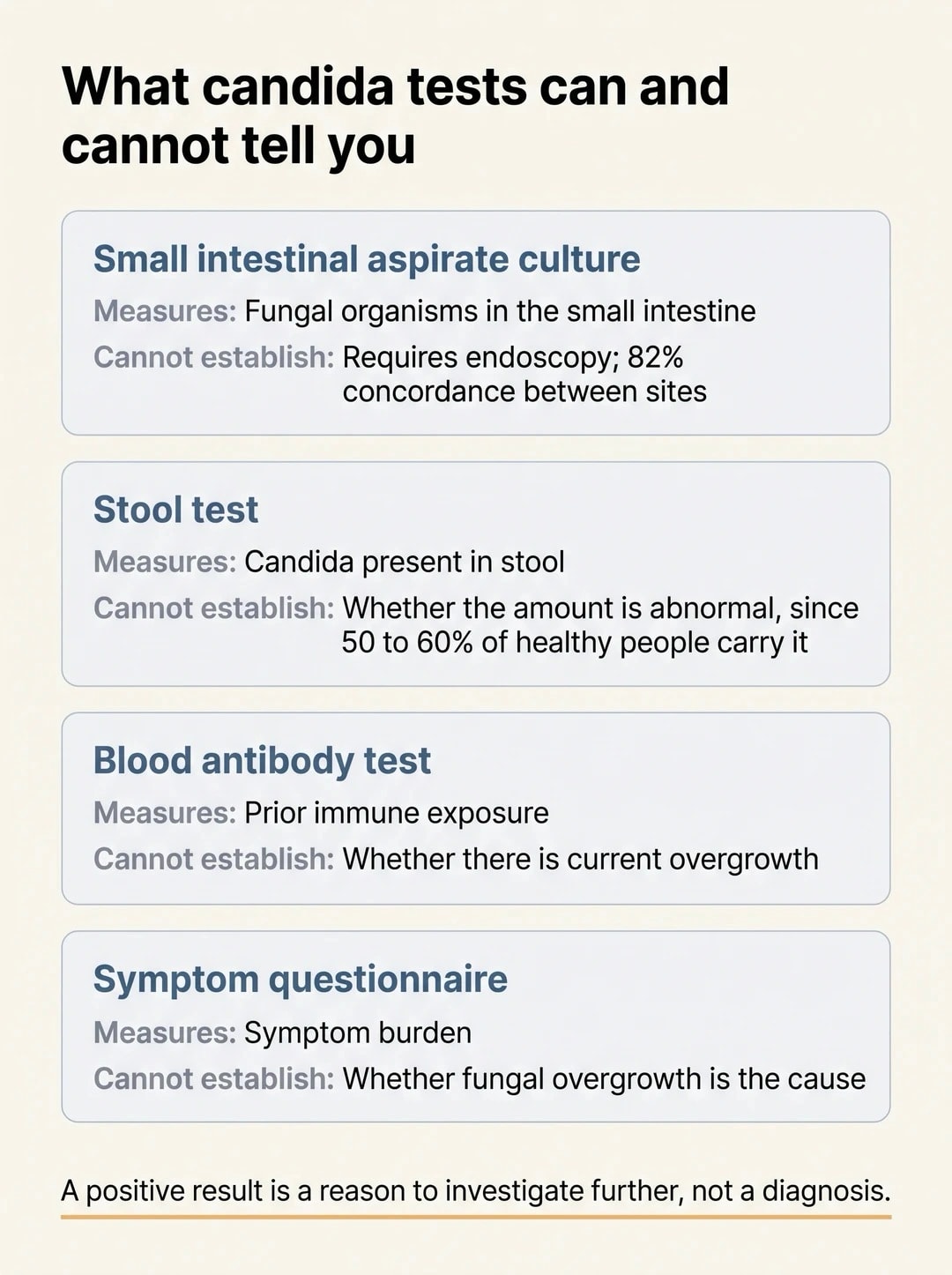
Table 2. What different candida tests can and cannot tell you
| Test | What it measures | What it cannot establish |
|---|---|---|
| Small intestinal aspirate culture | Fungal organisms in the small intestine | Requires endoscopy; 82% concordance between sites |
| Stool test | Candida present in stool | Whether the amount is abnormal, since 50 to 60% of healthy people carry it |
| Blood antibody test | Prior immune exposure | Whether there is current overgrowth |
| Symptom questionnaire | Symptom burden | Whether fungal overgrowth is the cause |
A positive result is a reason to investigate further, not a diagnosis.
Where at-home testing is genuinely useful
It is not useless. A stool test showing a marked change from a previous result, or appearing alongside a documented antibiotic course and new symptoms, gives a clinician something to work with. The limitation is interpreting it alone, without that context.
6. What the evidence says about treatment
Where overgrowth is confirmed, the review literature describes a 2 to 3 week course of antifungal therapy, while being explicit that evidence for eradication is lacking. [2] Prescription antifungals also carry interactions and monitoring requirements, which is one reason this warrants assessment rather than self-treatment.
Probiotics
More mixed than the marketing suggests. A systematic review and meta-analysis of randomized controlled trials found probiotics reduced enteric candida colonization in preterm neonates. [8] Evidence from neonatal intensive care does not transfer automatically to a generally healthy adult with bloating.
Diet
Two different claims need separating here.
Diet alone as a treatment: no clinical trials show that a candida cleanse diet treats any diagnosed medical condition. [9] People often feel better on one, and there is a plausible explanation that has nothing to do with yeast: cutting sugar and refined flour removes most ultra-processed food, and eating more whole food tends to improve how people feel.
Diet alongside medical treatment: a different question with better evidence. A pilot study followed 120 patients with chronic intestinal candida overgrowth. Eighty received the antifungal nystatin plus dietary modification; forty received nystatin alone. At first follow-up the groups were comparable, 70.0% against 72.5%. The difference emerged at 3 months, where patients who had adhered to the dietary modification did better. [10] The authors are explicit that evidence-based guidelines for an anti-candida diet do not yet exist.
Where other approaches are a better fit than ours
If your symptoms began after a clearly identified trigger and resolve when it is removed, you may not need a full workup at all. If you have alarm features such as unexplained weight loss, blood in the stool or persistent fever, a gastroenterology referral should come before any functional medicine assessment. And if a straightforward elimination trial supervised by a dietitian settles the question, that is a cheaper and faster route than anything we offer.
7. What to ask your clinician
“Constant bloating, gas, and changes in bowel movements all need a closer look. But they do not automatically point to candida.”
- Take the symptoms seriously and the checklist lightly. Recognizing yourself in a symptom list is a reason to investigate, not a diagnosis.
- Ask what else could explain it. Several conditions produce the same complaints and some are more common.
- Mention proton pump inhibitors and any motility problems. Both were independent risk factors in the research.
- Ask about blood sugar if recurrent yeast infections are part of the picture, particularly when other signs of insulin resistance or metabolic dysfunction are present.
- Bring your antibiotic history. Courses taken, roughly when, and whether symptoms began or worsened afterward.
- Get persistent changes checked properly. A new or lasting change in bowel frequency or consistency from your normal, unexplained weight loss, blood in the stool or persistent fever all need clinical assessment rather than a protocol bought online.
Persistent gut symptoms that nobody has explained?
Our clinician-led assessment looks at history, medication and metabolic markers together rather than treating one symptom at a time.
Book a consultation8. The point
“About one in four people who are tested properly may have candida, so it is worth addressing and taking seriously when these symptoms are causing issues.”
“I always want you to understand why you are experiencing these symptoms, not just keep guessing what they are. Your body is giving you valuable information, and the goal is to understand what it is telling us so we can address the underlying root causes.”
Frequently asked questions
Not sure which route fits?
Book a consultation and we will tell you honestly if you would be better served elsewhere.
Book a consultationMedical disclaimer. This article is for general information and is not medical advice. It does not replace consultation with a qualified clinician. Health coaches do not diagnose conditions, prescribe medication or alter treatment plans; all clinical decisions are made by licensed healthcare providers.