
A hangover IV promises to undo a rough night in about forty five minutes. Some of that promise is real and some of it is marketing, and it's worth knowing which is which before you book one. Here's what's in the bag, what the fluids genuinely fix, and where the claims run ahead of the evidence.
Do hangover IVs actually work?
They work for the specific thing they're designed to do, which is rehydrate you quickly. Alcohol is a diuretic, so a heavy night leaves you down on both fluid and electrolytes, and that fluid deficit is responsible for a real share of the headache, dizziness, and fatigue you wake up with. Putting saline straight into a vein corrects that faster than drinking can, because it skips digestion entirely.
What it doesn't do is treat a hangover in full. A hangover isn't only dehydration. It's also the toxic byproduct your body produces while breaking alcohol down, an inflammatory response, badly fragmented sleep, an irritated stomach lining, and often a skipped meal or two. Fluids don't touch most of that. So the honest answer is that an IV can make you feel meaningfully better without making you feel fine.
| Hangover symptom | Does an IV help? |
|---|---|
| Dehydration, dry mouth, dizziness | Yes, directly and quickly |
| Electrolyte loss and muscle weakness | Yes |
| Nausea and vomiting | Sometimes, with a prescribed anti-nausea medication |
| Headache | Partly, to the extent it's driven by fluid loss |
| Alcohol still in your bloodstream | No. Only time clears it |
| Poor sleep and next-day fog | No |
What's actually in a hangover IV
The foundation is saline, which is sterile salt water balanced to roughly match the electrolytes already in your blood. It isn't exotic and it isn't supposed to be. It's the ingredient doing nearly all of the work. Most clinics add electrolytes like magnesium and potassium on top, since your kidneys flush those out along with the fluid you lost overnight.
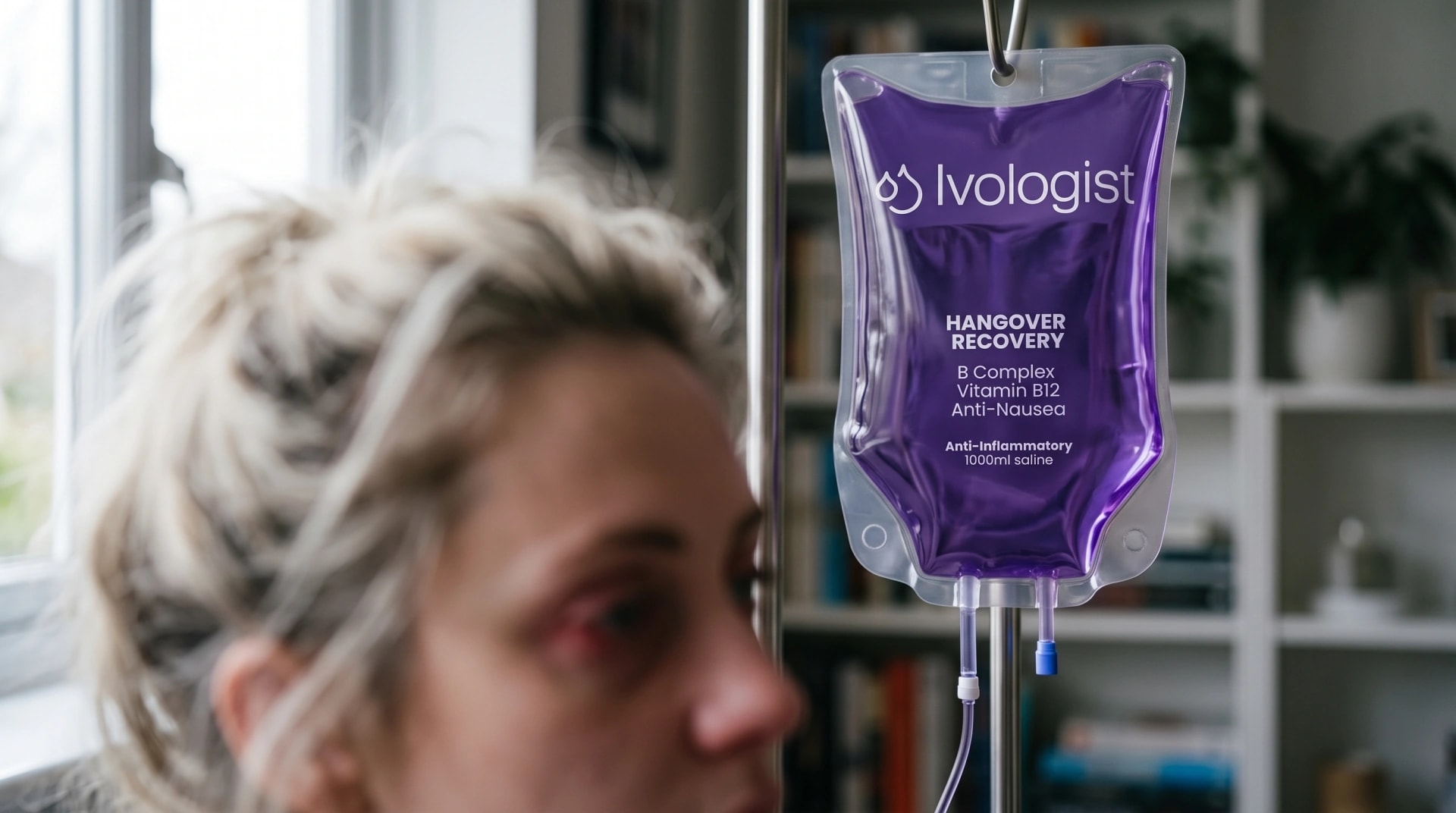
After that come the vitamins, usually B-complex and vitamin C. B vitamins are genuinely involved in energy metabolism and vitamin C is an antioxidant, so the reasoning isn't invented. But the effect on a hangover specifically is modest, and if you're not deficient to begin with, your kidneys excrete most of what you don't need. Treat them as a small bonus rather than the reason you're there.
Add-ons vary more. Ondansetron is a prescription anti-nausea medication with a real evidence base, and it's the add-on most likely to change how you feel. Glutathione is popular in wellness marketing but the evidence for hangover relief is thin. Pain relievers should only be given by a provider who knows what you drank and when, because acetaminophen and alcohol are hard on the liver together, and anti-inflammatories are hard on an already irritated stomach.
What a drip can't fix
No IV flushes alcohol out of your system. Your liver metabolizes it at its own pace, roughly one standard drink an hour, and there's nothing in a hydration bag that speeds that up. If you're still over the limit when you sit down, you'll still be over the limit when you leave.
An IV also can't undo the sleep you didn't get or the inflammation already underway. People who expect to feel like the night never happened tend to be disappointed. People who expect to go from unable to function to functional usually aren't.
Not sure whether you need an IV or just fluids and rest?
A licensed provider reviews your symptoms first and tells you when an IV isn't warranted.
See IV therapy in San AntonioWhen a hangover IV is genuinely worth it

The clearest case is when you can't keep fluids down. If every sip of water comes back up, oral rehydration isn't an option, and bypassing the stomach stops being a convenience and starts being the point. This is the same reason hospitals use IV fluids for dehydration from illness or food poisoning.
The second case is practical rather than medical. If you have something you genuinely can't move, an IV compresses recovery from most of a day into about an hour. That's a legitimate reason to use one, as long as you're clear that you're buying back time and not buying a cure.
Signs an IV may actually help:
- Vomiting or nausea that stops you keeping fluids down
- Dizziness, dry mouth, or lightheadedness when you stand up
- Very little urine output, or urine that's notably dark
- Fatigue that hasn't improved at all after rest and fluids
For a mild hangover, none of this applies. Water, an electrolyte drink, food, and a few hours will get you to the same place for a fraction of the cost. Our post on home IV therapy versus oral supplements covers where that line usually falls.
Risks and picking a provider
An IV is a medical procedure, and it carries the risks of one. They're small in trained hands but they aren't zero.

What to check before you book:
- A licensed clinician reviews your history before anything is placed, including heart, kidney, and blood pressure conditions, where extra fluid volume isn't harmless.
- The person placing the line is a nurse or paramedic, not a technician with a weekend certificate.
- Every ingredient and its dose is written down and shown to you.
- Prescription add-ons are actually prescribed, not offered off a menu like a coffee syrup.
- Pricing is disclosed up front, including which add-ons cost extra.
Never use a home kit or let an untrained friend place a line. The common complications are bruising, vein irritation, and infection at the site, and all of them get more likely the further you get from a trained provider. More on the myths around this in our post debunking the myths about IV treatment.
Frequently Asked Questions
Where to go from here
Hangover IVs aren't a miracle and they aren't a scam. They're a fast, effective way to correct dehydration, which is one real component of how bad you feel, and they're worth using when that component is the one holding you back.
Ivologist runs mobile and in-clinic IV therapy in San Antonio with licensed providers who will tell you when an IV isn't the right call.
Medical disclaimer. This article is for informational purposes only and does not constitute medical advice. IV therapy is a medical procedure and should only be administered by a licensed provider after an appropriate evaluation. It is not a treatment for alcohol intoxication and does not reduce blood alcohol concentration. Individual responses vary. Seek emergency care for confusion, seizures, repeated vomiting, or difficulty staying awake after drinking. Always consult a qualified healthcare provider before starting any treatment.